
Last updated November 15, 2026
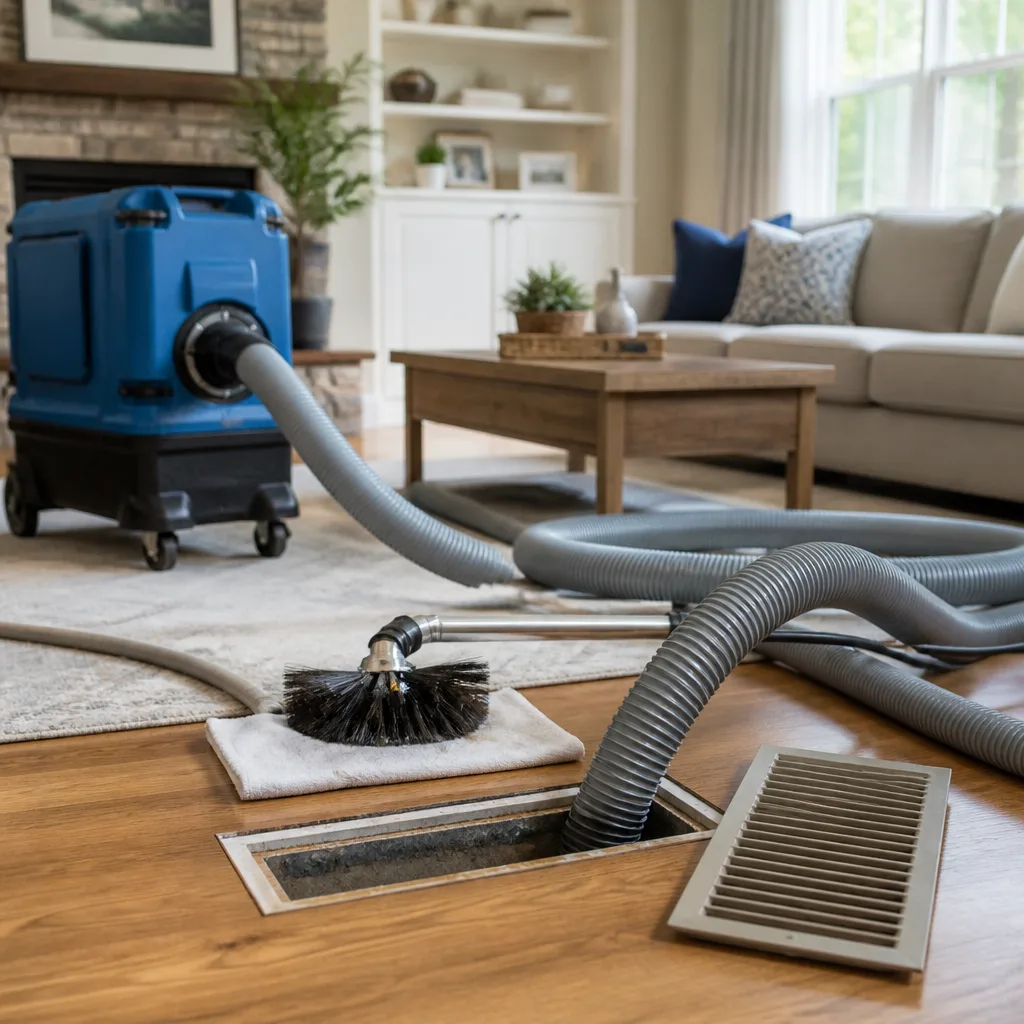 Whole-home duct cleaning
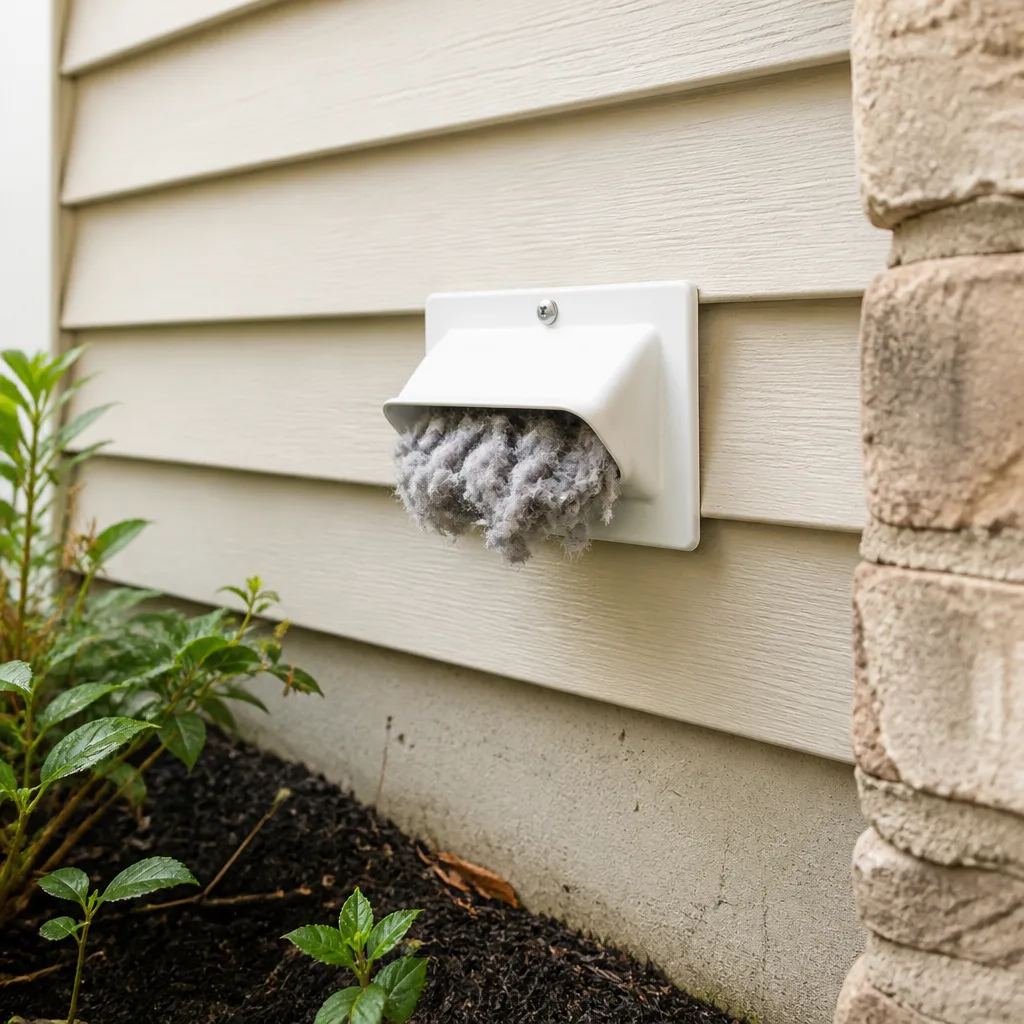 Dryer vent cleaning
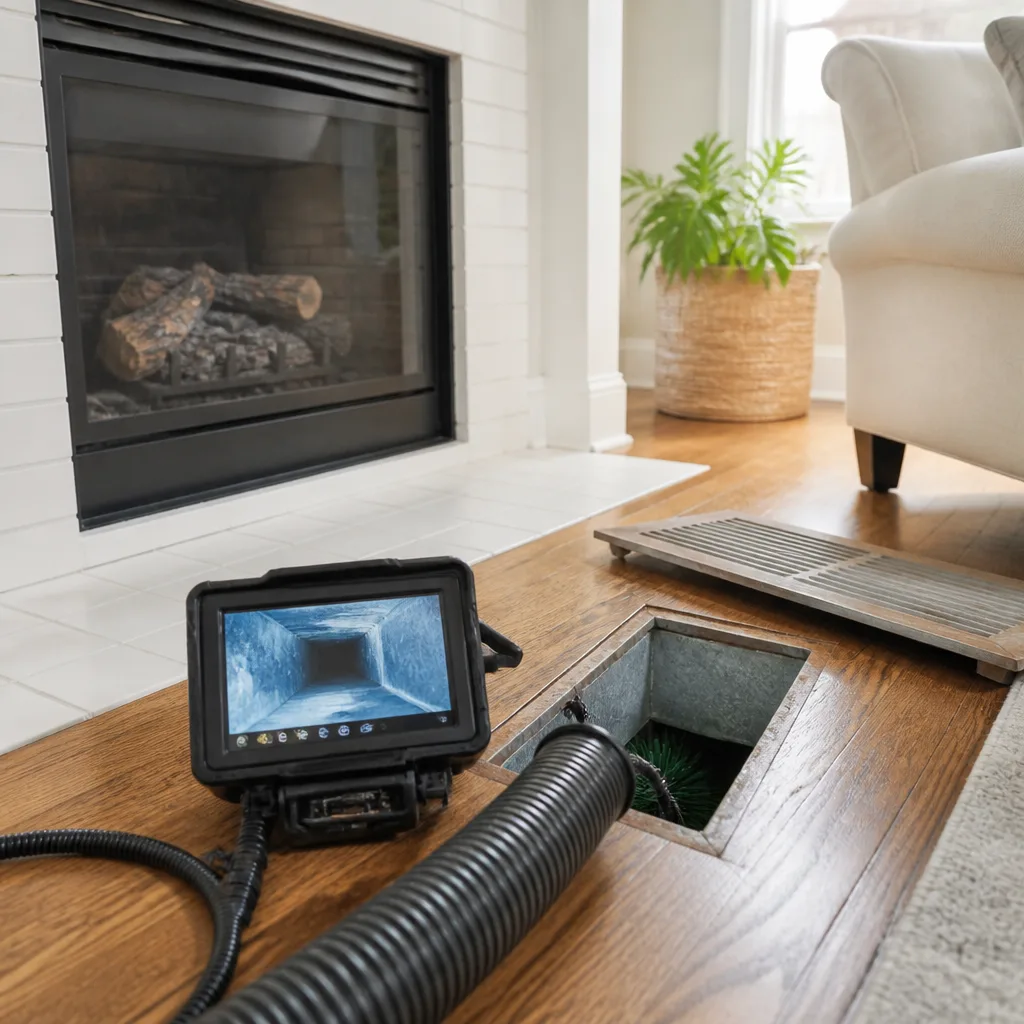 Camera inspection
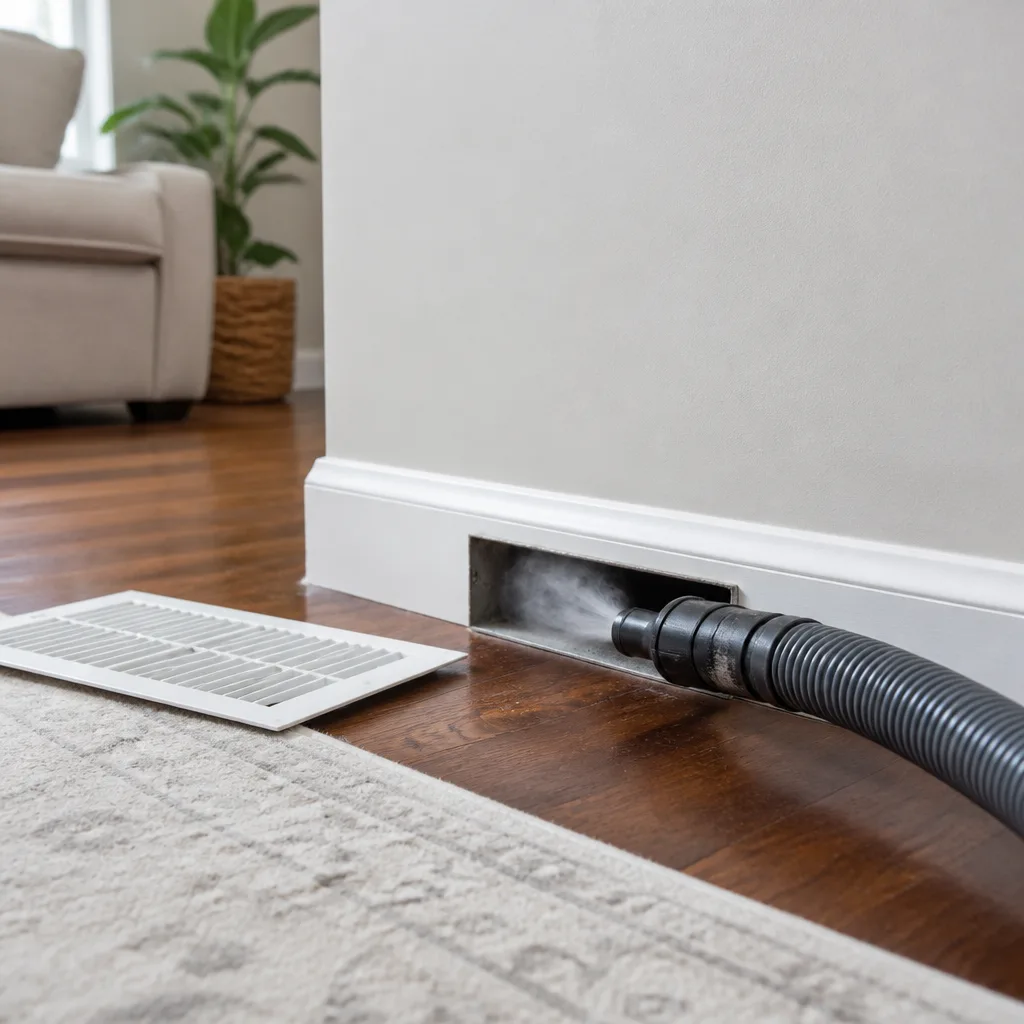 Sanitizing & deodorizing
Whole-system duct and dryer vent check with before-and-after photos - you see exactly what came out of your vents
That "$99 whole-house special" is a bait ad - the real number appears once they are in your hallway, or the "clean" is a shop-vac at the register. We photograph the inside of your ducts before and after instead.
How to Hire an Air Duct Cleaning Contractor in Modesto: A Step-by-Step Guide
Here’s the fact most homeowners never hear until it’s too late: California does not require a state contractor license to clean air ducts. A company can legally knock on your door, quote a whole-house job, and have no credentialed training at all. That’s the counterintuitive part. The license you’d normally check for a plumber or electrician simply isn’t the filter here. So what separates a real duct cleaning contractor from a shop-vac and a sales script? The questions you ask before anyone touches your equipment. This guide walks you through those questions in order, from equipment specs to the written scope of work to the post-job walk-through, so you can hire with your eyes open in Modesto.
Quick Answer
To hire an air duct cleaning contractor in Modesto, verify four things before booking: the specific equipment they use (ask for brand names like Rotobrush and negative-air machines, not “truck-mounted”), a written scope of work listing register count and agitation method, a real physical business address you can check, and a live NADCA membership you can verify independently. Skip the door-hanger $49 whole-house quotes; a legitimate contractor prices the whole system and explains containment before work starts. The goal isn’t the cheapest bid. It’s a contractor who can answer equipment questions without flinching.
Styles & brands we work with
- Whole-home duct cleaning
- Dryer vent cleaning
- Camera inspection
- Sanitizing & deodorizing
Table of Contents
- Why California Doesn’t License Duct Cleaners
- The Equipment Questions to Ask Before You Book
- How to Verify NADCA Membership for Real
- What a Legitimate Written Scope of Work Includes
- Red Flags Specific to the Modesto Market
- How to Run the Post-Job Inspection Walk-Through
- Cleaning, Repair, and Dryer Vents: Who Handles What
- Why Modesto’s Climate Makes Duct Health a Year-Round Issue
Why California Doesn’t License Duct Cleaners (and What to Check Instead)
California’s contractor licensing system covers structural work, electrical, plumbing, and HVAC installation. Routine air duct cleaning falls outside the licensing requirement in most cases. That’s not a loophole you can close on your own; it’s just the reality of the market. What it means for you is simple: the license check you’d run on a roofer won’t help here. You need a different filter.
The filter is a combination of four signals, checked in this order:
- Equipment specificity. A real contractor names their machines. A scam artist says “industrial equipment” and moves on.
- A written scope of work. Everything in writing before a single register comes off.
- A verifiable physical address. Not a P.O. box, not a cell phone in a van.
- Independent trade membership. NADCA is the one that matters, and membership is verifiable online.
None of these signals costs you anything to check. Together they filter out nearly every operator who is going to quote you a low number and then invent charges once the equipment is in your driveway. In our experience, homeowners who ask these four questions before booking rarely end up with the bait-and-switch job. The conversation itself sorts out the serious contractors from the ones who leave when the questions get specific.
For Modesto homeowners, this matters because the market here has plenty of both kinds of operators. The Central Valley’s older housing stock, single-story ranch homes with long duct runs in the attic, makes duct cleaning genuinely worthwhile when it’s done right. The same housing stock also makes it easy for a shortcut technician to run a hose in one register, spray some fog in the system, and call it a whole-house job. Knowing what to ask is the entire defense.
The Equipment Questions to Ask Before You Book
This is the heart of the guide. Equipment is the single best proxy for how serious a duct cleaning contractor is, because equipment costs money, requires training, and can’t be faked over the phone. Ask these questions on the initial call and listen carefully to how the answers come back.
1. What brand of agitation equipment do you use?
Agitation is the physical scrubbing that breaks debris loose from duct walls. Without it, you’re vacuuming a dirty surface and leaving the rest behind. The industry-recognized standard is a rotary brush system, and Rotobrush is the name-brand system most professional contractors use. If the answer is “we use a special brush,” ask for the brand. If they can’t name one, that’s your answer.
2. What’s your negative-air setup?
Negative air is what keeps the dust from redistributing into your living space during the job. A proper setup uses a HEPA-filtered negative-air machine pulling air out of the duct system while the technician works the branches. Nikro is one name-brand line used in this role, and Abatement Technologies equipment signals containment-grade capability. Ask what machine they bring and whether it runs HEPA filtration. A contractor using a shop vac is not running negative air; they’re just making noise.
3. Is your equipment truck-mount or portable?
Both are legitimate. Truck-mount systems generate high airflow from a dedicated unit parked outside; portable systems are positioned inside the home. The question isn’t which is better. It’s whether the contractor can explain the difference and tell you which they use and why. A technician who understands their equipment answers this easily. A person reading from a script does not.
4. What CFM does your vacuum pull?
CFM, cubic feet per minute, is the airflow rating. A true duct cleaning vacuum is measured in the thousands. A shop vac is measured in the hundreds. You don’t need to know the exact industry threshold to ask the question; you need to see whether the number is offered confidently or deflected. If a contractor hedges on CFM, that’s a signal they’re running consumer equipment.
This is where we’re direct about our own approach: our technicians use professional-grade Rotobrush rotary systems and Nikro negative-air machines on every job, and Abatement Technologies equipment is on hand for containment-level air quality situations. The tools we use are the same ones pros use on commercial jobs. That’s not a sales line; it’s the answer to a question you should be asking every contractor you call in Modesto.
How to Verify NADCA Membership for Real
NADCA, the National Air Duct Cleaners Association, is the trade body that publishes the industry standard for duct cleaning (ACR, the Assessment, Cleaning, and Restoration standard). Membership is voluntary. It’s also the clearest credential available in a trade where licensing doesn’t apply. Here’s the catch: many websites put a NADCA logo in the footer without ever being a member. A logo is not a membership.
To verify, do this:
- Ask the contractor directly: “Are you a current NADCA member, and can I verify it?”
- Go to NADCA’s own member lookup, not the contractor’s website.
- Search by company name and city. A real member appears; a logo-only operator doesn’t.
- If the company uses a subcontractor, ask whether the sub is a member. Membership doesn’t transfer.
The same logic applies to any credential. Ask for the verifiable source, not the badge. A contractor who is genuinely credentialed will hand you the verification path without hesitation. If you get a runaround, treat it as a no.
Alongside membership, ask whether the contractor follows the NADCA standard in practice: source removal as the goal (physically removing debris, not just fogging the system), containment during the work, and a post-cleaning verification step. Those three things are what the standard is actually about. When you’re comparing contractors in Modesto, ask which ones can explain the standard without reading it back to you.
What a Legitimate Written Scope of Work Includes
A verbal quote is not a scope of work. Before any contractor starts, you should have a written document that specifies exactly what gets done, room by room and component by component. This is what protects you from the “we got in there and found more” conversation. Here’s what a real scope of work contains:
- Register count. The number of supply and return registers covered by the price. It should match the count in your home, not a round number.
- Linear footage. The approximate duct run footage being cleaned, and whether main trunks and branch lines are both included.
- Agitation method. The specific equipment and technique used to break debris loose.
- Containment plan. How the contractor keeps dust out of your living space during the job: negative air, sealing, HEPA filtration.
- Component list. Whether the blower, coil, and plenum are included or excluded, and whether that’s standard or an additional scope.
- Repair findings. What happens if disconnected or damaged ductwork is found. Is repair quoted separately, and by whom?
- Before-and-after documentation. Photos of your own ducts, not stock images.
Read the scope before you sign. Ask about anything that isn’t specified. A contractor who can’t produce a written scope is a contractor who’s planning to improvise the price. For much more detail on what a full system cleaning involves, see our page on air duct cleaning and how the process is structured job to job.
If you’re a landlord or property manager, get the scope of work per unit in writing across the whole property. Multi-unit work is where vague scopes cause the most trouble, because “whole house” means something different in a duplex than in a single-family ranch.
Red Flags Specific to the Modesto Market
Modesto’s duct cleaning market has a distinct set of warning signs, and they show up in patterns. Here’s what to watch for:
- Door hangers quoting $49 for a whole house. No legitimate contractor can clean a full residential duct system, run proper agitation and negative air, and document the work for a figure that low. The $49 is a door-open price, and the real invoice appears on-site.
- Unmarked vans and no business address. Ask for the physical address. If it’s a P.O. box or a phone number only, you have no recourse if the work goes wrong.
- No written scope before arrival. A contractor who quotes by phone and shows up with a clipboard and a credit card reader is planning to improvise.
- Pressure to decide at the door. Legitimate contractors let you think about it and send a written estimate. Urgency on the sidewalk is a red flag.
- Per-register pricing as the whole quote. Whole-system pricing is the honest model. A per-vent add-on structure lets the price inflate once the vents are counted.
- No repair capability. Modesto’s older ranch homes often have disconnected or crushed flex duct in the attic. If the contractor only cleans, a found repair becomes a separate scramble. Ask up front.
- No containment plan. If the answer to “how do you keep dust out of my kitchen?” is a shrug, walk away.
One more, and it’s specific to how the trade has evolved: a company that advertises dryer vent cleaning as a free add-on or a throw-in doesn’t take it seriously. Dryer vents are a fire-safety service, not a bonus. Treat any contractor who bundles it casually as a signal of how they treat the rest of the job. Our own dryer vent cleaning is a dedicated service for that reason.
How to Run the Post-Job Inspection Walk-Through
The work isn’t done when the equipment shuts off. It’s done when you’ve confirmed the work happened. Before the contractor packs up, run a short walk-through. Five to ten minutes, done right, tells you whether you got what you paid for. Here’s the sequence:
- Ask for the before-and-after photos. A legitimate contractor photographed the branches and trunk before starting and shot the same locations after. Look at the actual ducts. Stock photos or “representative” images don’t count.
- Check the register interiors. Pull a register grille in each major zone and look inside the boot. It should be visibly clean, not dust-coated. If you can see the grime they claimed to remove, the job was partial.
- Look at the plenum and coil area. The area around the air handler is where buildup is heaviest. If the scope said it was included, check it.
- Snap a photo of the negative-air machine before it comes down. You’re confirming the containment equipment was actually set up, not just promised in the sales call.
- Ask what the technician found during the job. Disconnected joints, crushed flex duct, rodent evidence, and coil condition all should be reported. A contractor who cleaned around a known problem without telling you didn’t do the job.
- Get the invoice itemized. It should match the written scope. If a line item appeared that wasn’t in the scope, question it before paying.
In our experience, the walk-through is where good contractors separate from quick ones. A contractor proud of the work wants you to look. A contractor rushing to the next job doesn’t. If you’re uncertain how to read what you find, the team at Duct Cleaning Modesto can walk through it with you before you book a second opinion.
Cleaning, Repair, and Dryer Vents: Who Handles What
Duct health has three distinct parts, and a good contractor tells you which ones they cover. Cleaning is the routine part: source removal of accumulated debris from the duct system. Repair is the corrective part: reconnecting joints, replacing crushed or torn flex duct, sealing leaks, and addressing the damage that causes your bills to climb or your air to bypass the rooms you actually want to heat. Dryer vent cleaning is the safety part, and it belongs in its own category.
Here’s why the split matters. A contractor who only cleans will find repair issues and either walk away from them or subcontract them out at a markup. A contractor who handles both sees the whole picture in one job. On the repair side, sealing a torn flex run in a Modesto attic costs nothing extra in labor once you’re already in the system; doing it as a second appointment weeks later costs you the whole trip again.
Dryer vents are their own thing because they’re a fire-prevention service. Lint accumulation in a dryer vent is a documented fire cause, and a vent cleaning isn’t about air quality; it’s about removing the fuel load from inside a heat exhaust path. Dedicated dryer vent cleaning should be scheduled on its own interval, not lumped into a duct cleaning quote as an afterthought.
When you’re vetting contractors, ask which of the three they handle in-house. If any one of the three is outsourced, ask who does it and how the price is structured. You’ll learn a lot about the operation.
Why Modesto’s Climate Makes Duct Health a Year-Round Issue
Modesto sits in the northern San Joaquin Valley, which means long hot summers and short mild winters. Your HVAC system runs hard through the cooling season, pulling valley air through the return and pushing it through long duct runs in the attic. Attics in this climate get hot; summer heat in an uninsulated or under-insulated attic stresses duct connections and can degrade flex duct over time. That’s not a scare tactic, just physics. Longer runtimes mean more air moving through the system, more dust deposited on duct surfaces, and more opportunity for a small leak to grow.
The winter side is quieter, which is exactly why duct problems go unnoticed. Heat runs less, the attic cools, and any disconnected joint or torn flex run stays invisible until the following summer. Modesto homes also see seasonal dust that arrives with the dry months and settles into return-air paths. When you’re deciding how often to clean, that pattern, not a fixed calendar, is the real driver.
This is also why repair belongs in the same conversation as cleaning. Cleaning a system with a disconnected branch just redistributes air through the attic. Cleaning it after the disconnect is repaired delivers the air where it’s supposed to go. For Modesto, the sequence matters: find the damage first, then clean, then verify.
Common Mistakes to Avoid
- Hiring on price alone. The lowest quote is usually a door price, not a whole-job price. You’ll discover the real number once the equipment is on-site.
- Not asking for equipment brand names. “Industrial equipment” isn’t an answer. Ask for the brand of the agitation system and the negative-air machine.
- Accepting a NADCA logo without verification. Membership is verifiable in minutes. Do the lookup before you book.
- Skipping the written scope of work. If register count, footage, and containment plan aren’t on paper, you have no basis to dispute anything.
- Letting a door hanger set the price. Modesto sees plenty of $49 whole-house door hangers. Legitimate contractors don’t need to bait the price.
- Cleaning before repairing. If the system has a disconnected branch or crushed flex, clean it after repair or the cleaning is wasted.
- Skipping the walk-through. The five minutes it takes to look inside a register and check the before-after photos is the only verification you get.
See the difference
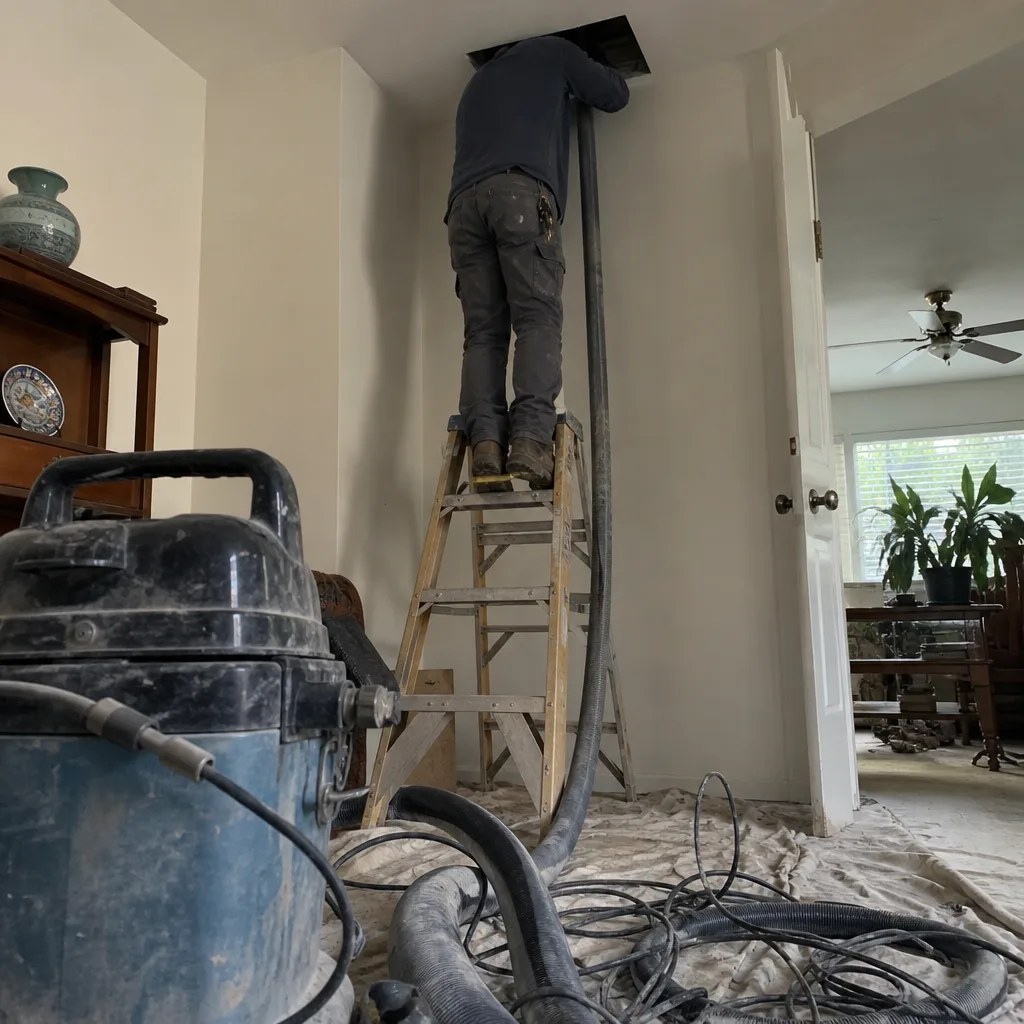 Before
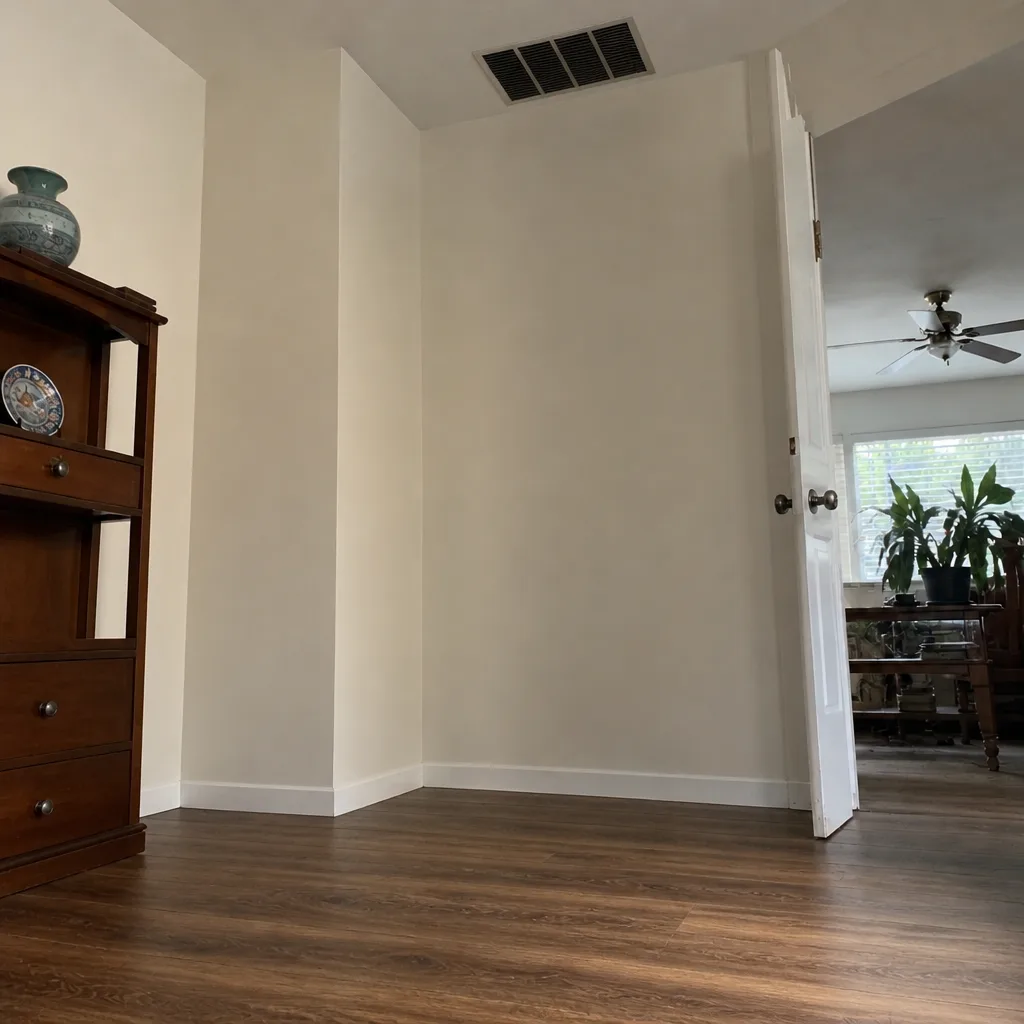 After
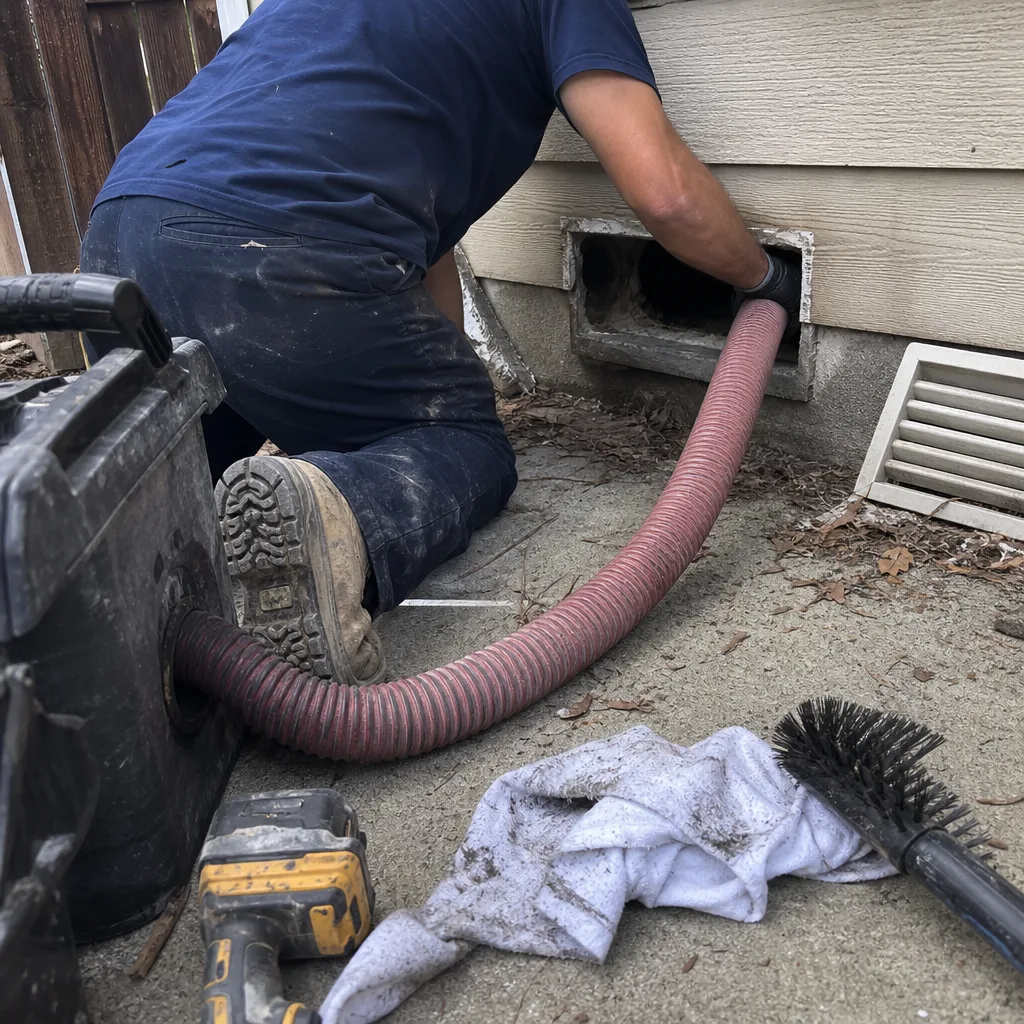 Before
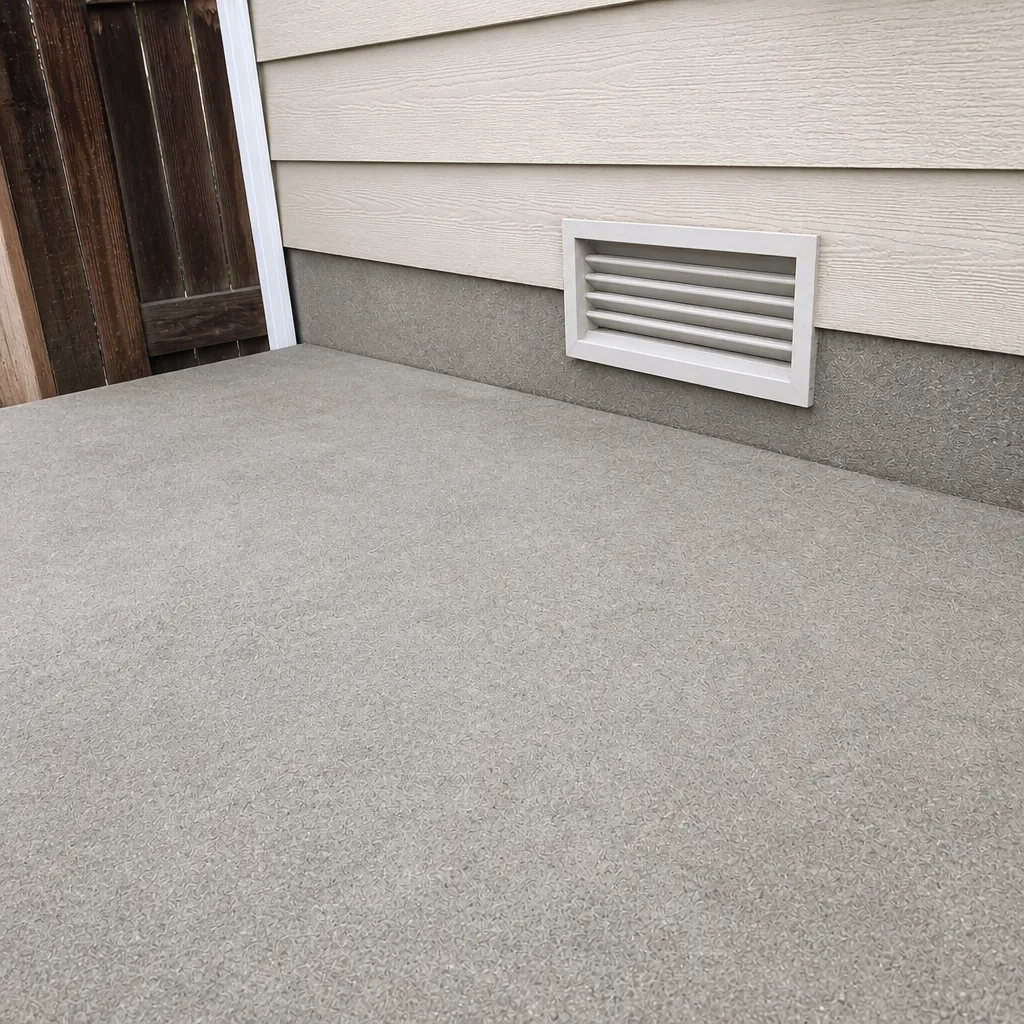 After
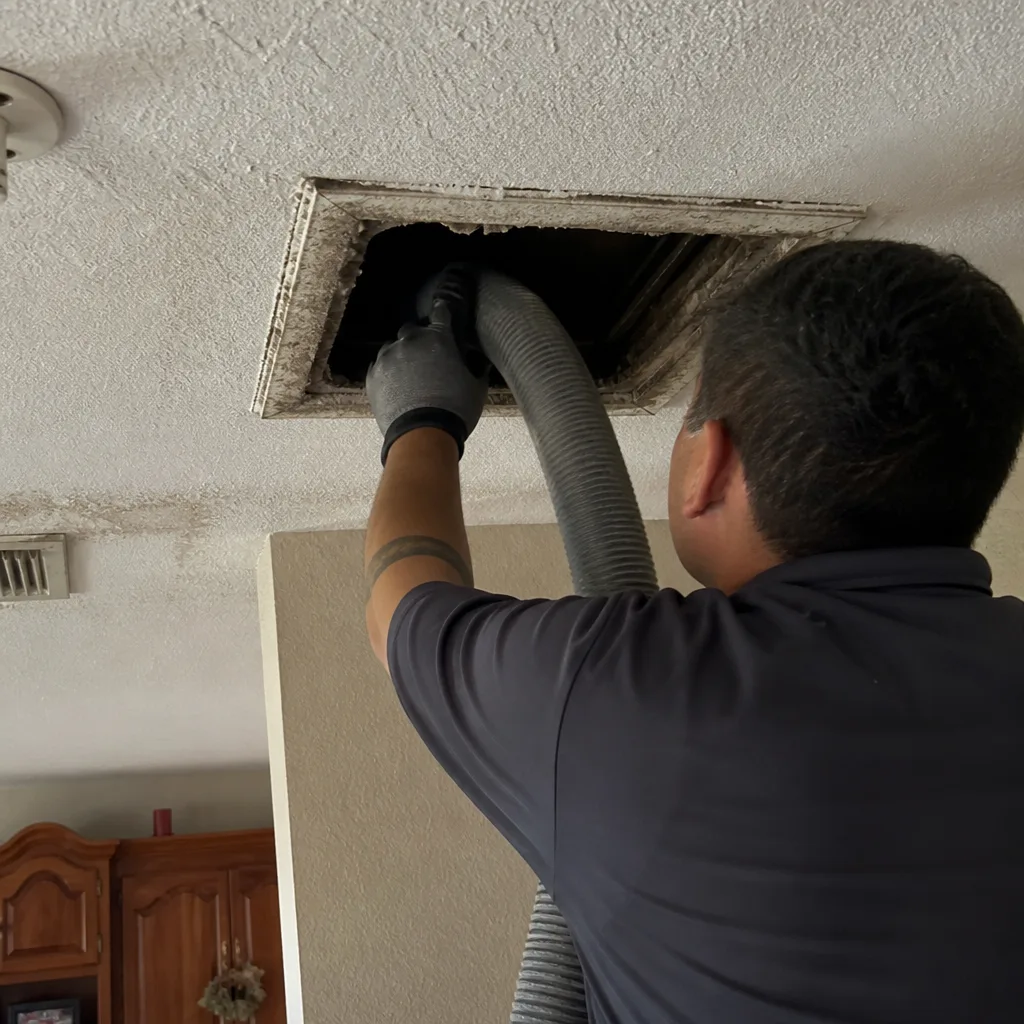 Before
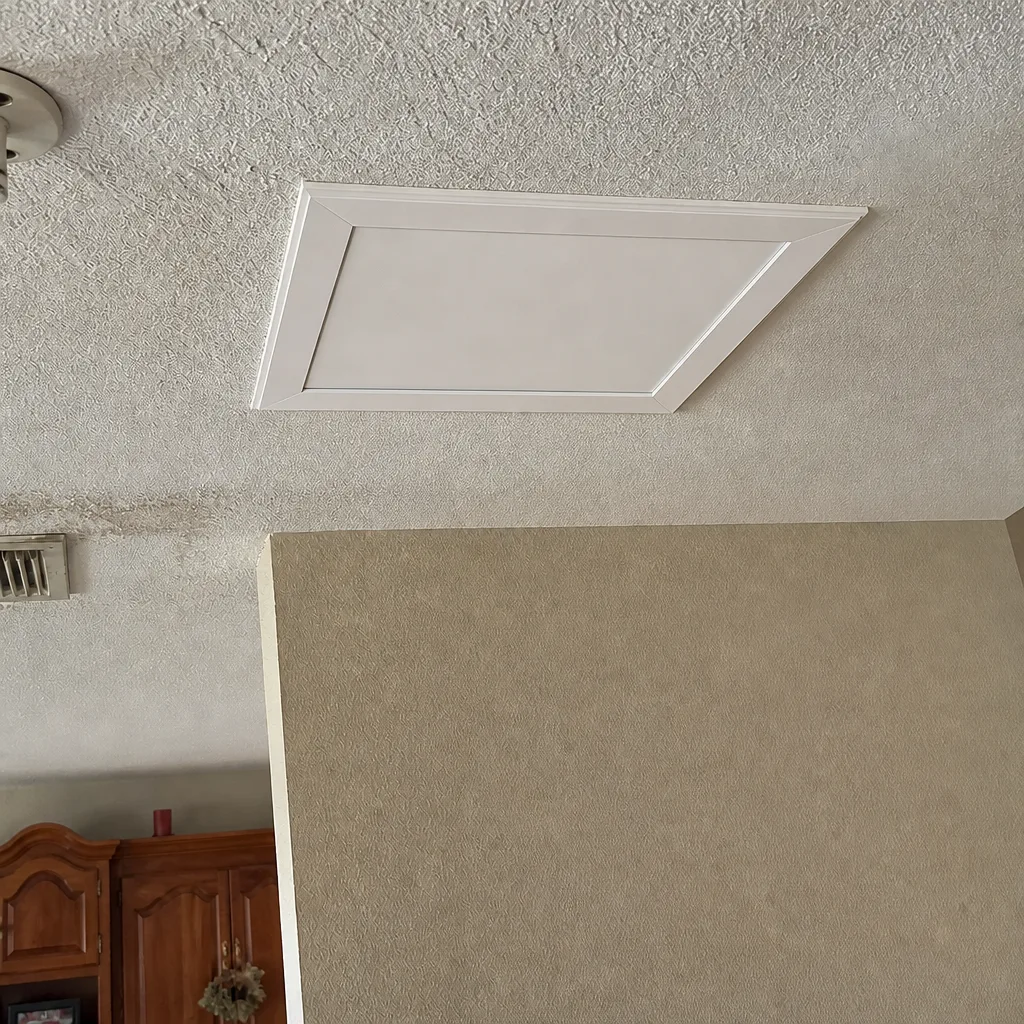 After
When to Call a Professional
Some signs mean it’s time to book an appointment. Visible dust blowing from registers when the system kicks on. A noticeable musty smell that returns after a filter change. Rooms that won’t hold temperature the way they used to. A dryer that takes noticeably longer than it used to, since that’s a dryer vent safety signal. And any time you’ve had construction or a rodent issue in the house, since either can leave debris in the duct system that a filter won’t catch. If the system has never been inspected and it’s been in the house across multiple seasons, an inspection is a reasonable starting point even without symptoms.
Duct Cleaning Modesto offers free estimates in Modesto. Call (866) 256-3971. We answer 24/7. Fast dispatch from 7am to 7pm, Sunday through Friday. The estimate sets the price per job, in writing, before any equipment comes off the van.
Frequently Asked Questions
No. California does not require a state contractor license specifically for air duct cleaning in most cases, which is why equipment verification and NADCA membership matter more here than a license lookup. Ask about equipment brand, written scope, and independent membership before you book. Call (866) 256-3971 for a free estimate.
A legitimate contractor brings a rotary brush agitation system, a HEPA-filtered negative-air machine, and a containment setup. Ask for brand names: Rotobrush and Nikro are the trade-standard categories, and Abatement Technologies equipment signals containment-grade capability. If the contractor can’t name their equipment, that’s your answer. Call (866) 256-3971 for a free estimate.
Ask the contractor for their membership and then verify it through NADCA’s own member lookup, not the contractor’s website. A footer logo proves nothing on its own. Membership is voluntary but verifiable, which is what makes it useful. Call (866) 256-3971 for a free estimate.
Cheap quotes are usually door prices: a low figure to get into the house, with the real scope added once the technician is on-site. Whole-system pricing with a written scope is the honest model. Compare the scope, not just the number. Call (866) 256-3971 for a free estimate.
Ask for before-and-after photos of your own ducts, look inside register boots at the walk-through, and confirm the negative-air machine was set up. Photos of your system, not stock images, are the direct evidence. Call (866) 256-3971 for a free estimate.
They’re separate services with separate safety reasons. Dryer vent cleaning removes lint from the exhaust path, which is a fire-prevention job, not an air-quality one. Schedule it on its own interval and make sure the contractor treats it as a dedicated service. Call (866) 256-3971 for a free estimate.
If the system has a disconnected branch, crushed flex, or torn joints, repair should come first. Cleaning a damaged system pushes air into the attic instead of your rooms. A contractor who handles repair in-house can catch it on the same visit. Call (866) 256-3971 for a free estimate.
There’s no fixed calendar; the honest answer depends on the home, the system, and what the inspection shows. Visible dust at registers, a returning musty smell, or a recent construction or rodent issue are the practical triggers. Schedule an inspection and let the findings set the interval. Call (866) 256-3971 for a free estimate.
The Bottom Line
The duct cleaning market has no licensing floor in California, so the vetting is on you. The good news is that the questions are simple and the contractors worth hiring welcome them. Ask for equipment brand names, not “industrial equipment.” Ask for a written scope with register count and containment plan. Verify NADCA membership independently. Check the physical address. Then run the walk-through after the job and look for real before-and-after photos of your own ducts. Do those five things and the bait-and-switch quote never gets a foothold. That filter works everywhere in Modesto, and our technicians have up to 13 years of experience answering exactly these questions. If you’re ready to book, call (866) 256-3971 for a free estimate. We work on the duct system, not just around it. Clean ducts. Repaired ducts. Safe vents. One call.
Written by the team at Duct Cleaning Modesto.