
Last updated November 15, 2026
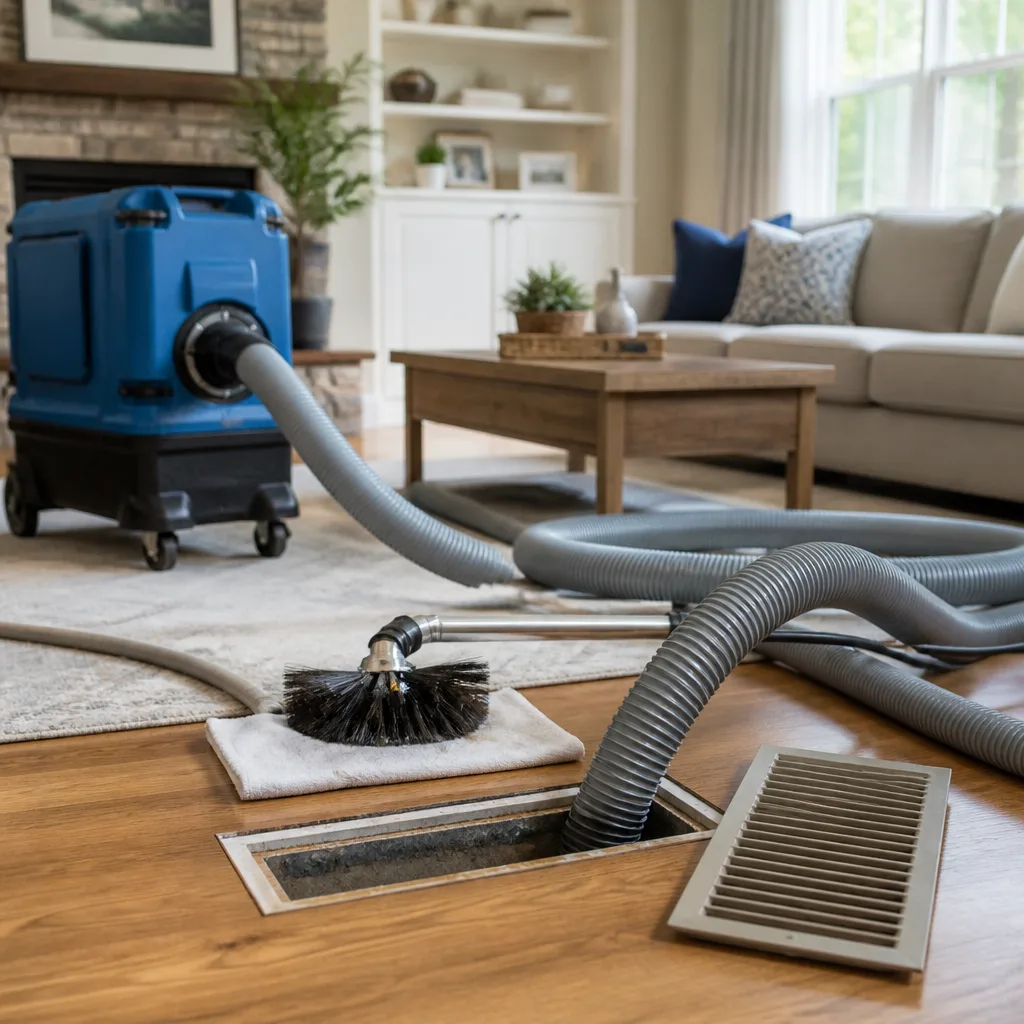 Whole-home duct cleaning
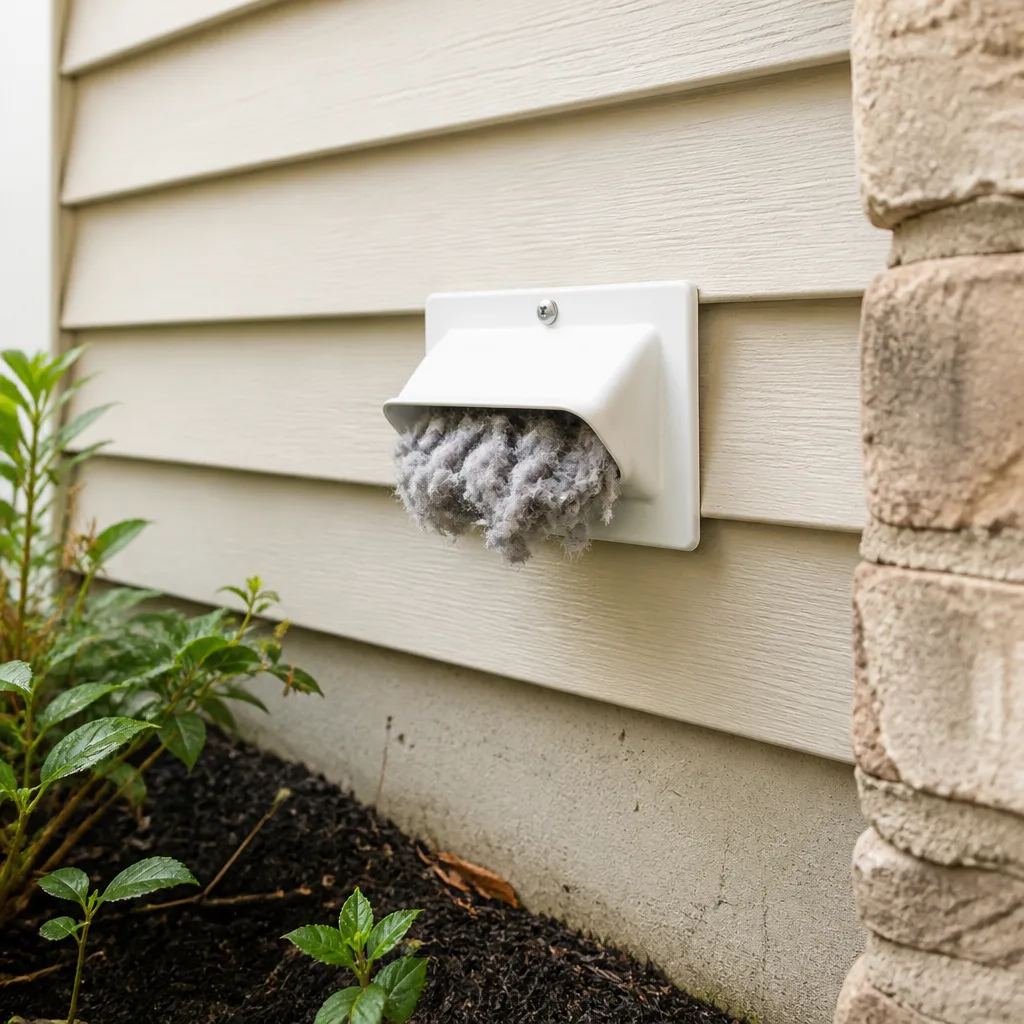 Dryer vent cleaning
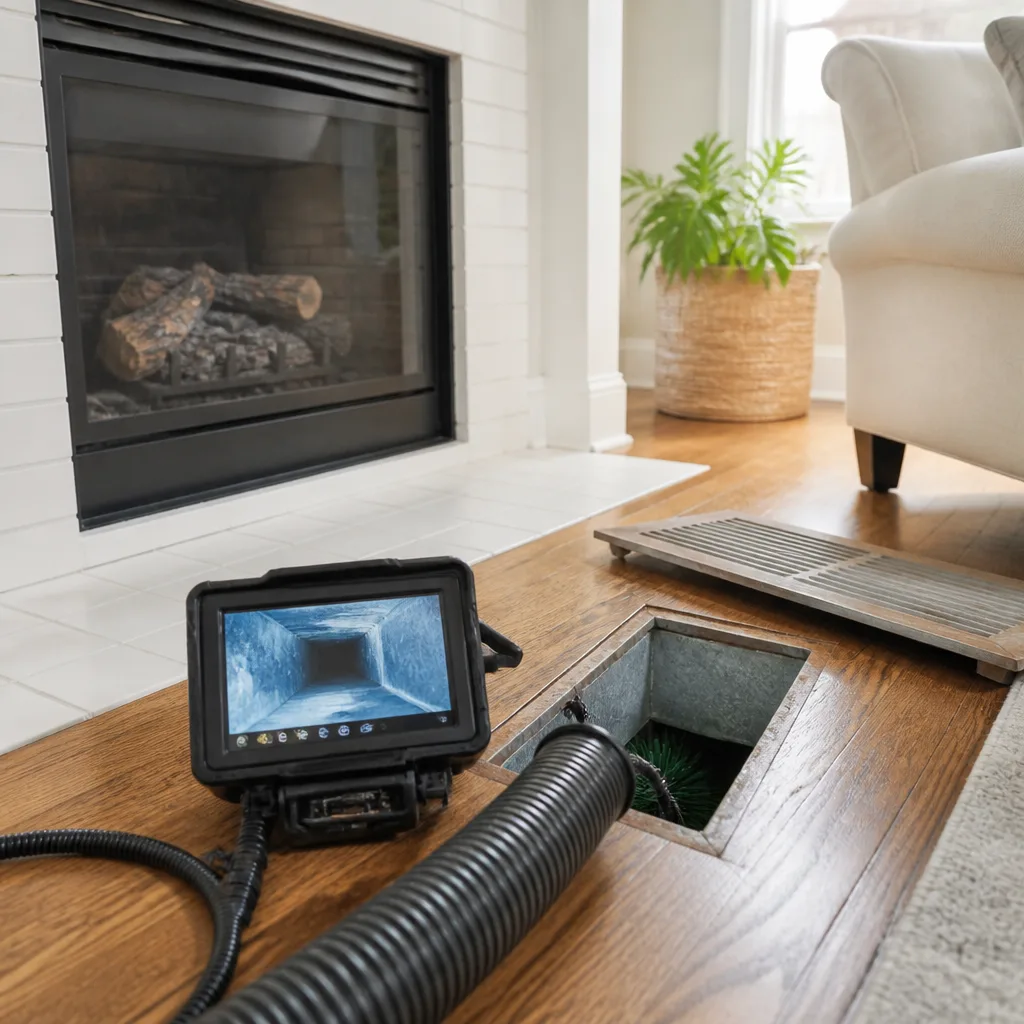 Camera inspection
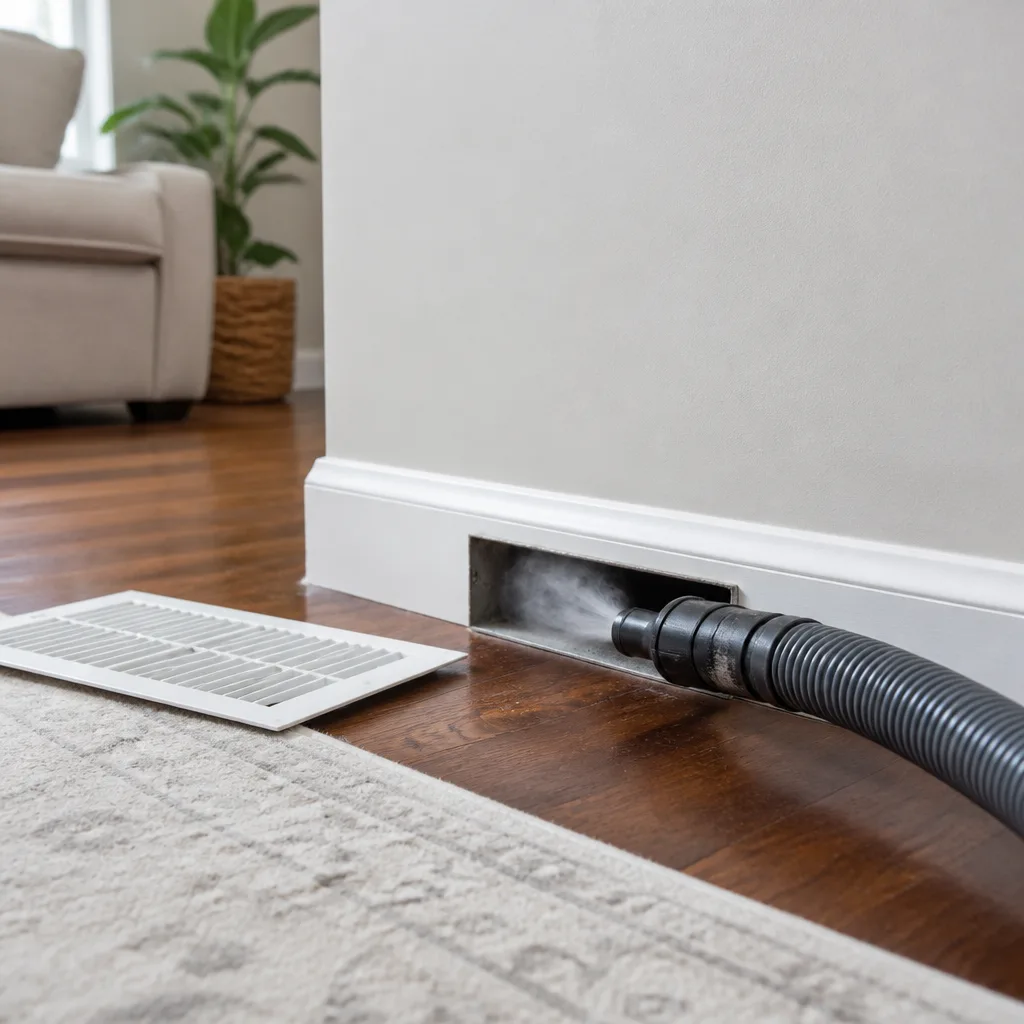 Sanitizing & deodorizing
Whole-system duct and dryer vent check with before-and-after photos - you see exactly what came out of your vents
That "$99 whole-house special" is a bait ad - the real number appears once they are in your hallway, or the "clean" is a shop-vac at the register. We photograph the inside of your ducts before and after instead.
Air Duct Cleaning Troubleshooting in Modesto: Common Problems and How to Fix Them
If one room in your house is always 5 – 8 degrees off from the thermostat setting, your HVAC system isn’t the likely culprit. Your duct system is, and replacing filters won’t change a thing. Most homeowners in Modesto assume a weak furnace or a tired AC condenser is behind uneven cooling and dusty air. In our experience, the equipment is usually doing its job. The problem lives in the network of flex duct, sealed joints and plenum connections that carries the air from the unit to your rooms. When that network fails, no amount of equipment tune-up fixes it. This guide teaches you to read the symptoms your ducts are already broadcasting, tell a dirty-duct problem from a broken-duct problem, and know which fixes actually apply.
Quick Answer
Most air duct problems in Modesto trace to one of three things: accumulation of debris and dust inside the ducts, physical damage like collapsed or disconnected flex duct, or a breached seal at a plenum or joint. A tune-up won’t fix any of them. You diagnose the difference by testing airflow at each register and, when the symptoms point to hidden damage, using a camera inspection. Cleaning fixes the debris problem. Repair or replacement fixes the broken-duct problem. Knowing which one you have saves you from paying for the wrong service.
Styles & brands we work with
- Whole-home duct cleaning
- Dryer vent cleaning
- Camera inspection
- Sanitizing & deodorizing
Table of Contents
- Is it a dirty duct problem or a broken duct problem?
- How to test airflow at your registers
- What Modesto’s valley heat does to flex duct
- How a breached return plenum pulls attic air into your home
- The DIY symptom checklist: what you can spot and what needs a camera
- When duct cleaning alone won’t fix it
- Dryer vent problems that look like duct problems
- Common mistakes to avoid
Is it a dirty duct problem or a broken duct problem?
A dirty duct and a broken duct can produce nearly identical symptoms: weak airflow, dust, uneven temperatures. The difference is what’s causing them. Dirt is a restriction inside a working duct. Damage is a duct that no longer carries air the way it was designed to. That distinction determines whether you need cleaning or repair, and it’s the first thing to sort out before you spend money on either.
Here’s how the two problems tend to present themselves:
- Dirty ducts usually show gradual decline. Airflow weakens slowly across the whole house, dust settles on surfaces faster than it used to, and the smell from supply registers gets musty or stale over time.
- Broken ducts often appear suddenly or unevenly. One room goes weak or warm while the rest of the house is fine. You hear a rattle, a hiss, or a rush of air in a wall or ceiling you didn’t notice before.
- Blocked or collapsed ducts show up as a single register with almost no airflow, even when the unit is running and the thermostat is calling for cool. The rest of the house runs normally.
In Modesto, we see a lot of both. Valley dust gets pulled into return ducts all summer, which is the slow, even kind of decline. Flex duct damaged by age and heat is the sudden, uneven kind. Sorting one from the other early is the whole game. If you’ve already noticed a specific room running 5 – 8 degrees off, start by reading the airflow section below.
How to test airflow at your registers
Airflow testing at the registers is the fastest way to figure out whether your problem is system-wide or isolated to one branch of ductwork. You don’t need special tools to do a basic version. You need a thin strip of tissue or a piece of light paper and five minutes at each register with the system running.
- Run the system on fan only for a few minutes. Let it stabilize so you’re reading steady airflow, not a startup surge.
- Hold the tissue against each supply register. Note how strongly it’s pulled or pushed. You’re looking for evenness across rooms, not a specific number.
- Compare rooms that should be similar. Two bedrooms of the same size on the same floor should feel roughly comparable. If one is much weaker, that branch has a problem.
- Walk to the return registers and repeat. A return pulling weak, or pulling nothing, points to a restriction or a breach upstream.
- Listen for air where it shouldn’t be. A hiss near a wall, ceiling boot or floor vent with no visible gap often means a leak or disconnect behind the drywall.
- Check for rattle and vibration. A duct that pulses or rattles when the blower ramps up is usually loose, disconnected or undersupported.
If every register in the house is weak, something upstream is restricting the whole system. If one or two are weak while the rest are fine, the branch serving those rooms has a physical problem. That’s the point where simple branch testing stops telling you everything and a camera inspection starts to earn its place. This is the kind of diagnosis a trained technician with proper equipment resolves in one visit. Our team works on the duct system, not just around it, and making the dirty-versus-broken call first is what keeps a homeowner from paying for a clean they didn’t need.
What Modesto’s valley heat does to flex duct
Modesto sits in the Central Valley, which means long, hot summers and an attic that turns into a heat chamber for months at a stretch. That heat is hard on flex duct. The outer jacket that protects the insulation layer can degrade under sustained UV exposure and high attic temperatures, and once it does, the insulation inside starts to break down from the outside in. The duct still carries air, but its ability to hold temperature drops. That’s when a room starts running warm even though the unit is working.
There’s a second problem the valley heat creates. As the flex duct jacket weakens, it becomes easier for rodents and insects to get in. Crawlspace and attic vents are normal entry points, and a rodent that finds a compromised duct jacket turns one small hole into a nest, then into a leak, then into a real restriction. Once pests are inside the system, surface cleaning won’t solve it. You need a technician to find and isolate the damaged section.
- UV degradation affects flex duct routed through attics with sun-exposed runs. The jacket thins over time and the insulation inside compacts.
- Rodent entry usually starts near crawlspace and attic vents where the duct run gets close to a gap. Once breached, the duct leaks conditioned air into your attic.
- Heat cycling over a Valley summer can loosen tape and mastic seals at joints and boots, creating slow leaks you can’t see from the room.
If you’re getting estimates from contractors who don’t mention flex duct condition in an attic or crawlspace, ask them how they check it. UV and rodent damage is easy to miss during a quick visual sweep, and finding it is part of a proper air duct cleaning job, not something outside the scope.
How a breached return plenum pulls attic air into your home
The return plenum is the box or duct section that connects your return air trunk to the air handler. When that connection is breached, the air handler pulls attic air instead of house air. This is one of the hardest duct problems to spot because you don’t see it happen. What you notice is dust settling faster than it did before, a musty or attic smell that comes back after you clean, and allergies acting up in a way that doesn’t track with the seasons.
Attic air in a Modesto home carries insulation fibers, dust, pest residue and whatever the Central Valley air pulls in. When a breach lets it into the return, it goes straight into the air handler, through the coil and out every supply register in the house. The filter catches some of it. The rest lands on the coil (reducing its efficiency), on your furniture, and in your lungs. A homeowner who cleans the house and never sees a change is often looking at a plenum problem, not a housekeeping one.
What to watch for:
- Dust reappearing on surfaces within a day or two of cleaning
- An attic smell in rooms closest to the air handler
- Ice forming on the evaporator coil during summer (a sign the coil is starved for return air or overworked by a leak)
- Filter loading faster than it should
- A visible gap or taped-then-failed seal at the plenum connection
Sealing a breached return plenum is a focused repair. It’s not the same job as cleaning and it isn’t something filters fix. A technician with containment-grade equipment will isolate the plenum, reseal the connection and verify the fix by checking static pressure before and after. If you’re already thinking about a duct cleaning in Modesto, ask whether the estimate includes plenum inspection. If it doesn’t, you may be paying to clean a system that’s still open to the attic.
The DIY symptom checklist: what you can spot and what needs a camera
Some duct problems are visible with nothing more than a flashlight and a careful walk-through. Others hide inside wall cavities, behind ceiling drywall and in the back of an attic where you can’t safely go. Knowing which is which keeps you out of the places you don’t need to be and tells you when to call.
What you can check yourself:
- Airflow at every register (tissue test above)
- Visible gaps at floor and ceiling boots inside the room
- Loose or detached vent covers
- Dust patterns on walls and ceilings
- Filter loading speed and condition
- Smell from supply registers when the system first kicks on
- Rattle or hiss near a specific wall or ceiling
What needs a camera inspection:
- Condition of flex duct inside attic and crawlspace runs
- Whether a branch duct is disconnected or crushed behind drywall
- Whether the return plenum connection is actually sealed versus taped over
- Whether debris inside a run is surface dust or a physical blockage
- Whether pest intrusion has damaged insulation and jacket material
If your symptom checklist points to anything in the second list and you want to stop guessing, this is the point where a professional read of the system pays for itself. A camera inspection tells you exactly what’s going on in each branch instead of pointing at the whole house. Given how many Modesto homes were built with flexible duct routed through the attic, this step is often the difference between a clean and a repair.
When duct cleaning alone won’t fix it
Cleaning removes debris from ducts that are otherwise structurally sound. If the ducts are damaged, cleaning them is like mopping a floor while the sink is still running. The dirt comes back, and the underlying problem stays exactly where it was. That’s the honest rule we give homeowners: cleaning solves the dirty-duct problem and only the dirty-duct problem.
Three situations call for air duct repair rather than cleaning:
- Collapsed flex duct. A run that has sagged or been crushed by a shift in the attic insulation no longer passes air. Cleaning doesn’t reopen it. The damaged section has to be replaced.
- Disconnected joints and boots. When a duct has slipped off a boot or a plenum, conditioned air is dumping into the attic. Cleaning a disconnected duct just cleans the air going into the attic.
- Pest-damaged jacket and insulation. Once rodents have opened a duct, cleaning can’t reseal it or replace the insulation they’ve destroyed. The section has to be removed and rebuilt.
Duct repair is also the fix when the system design itself is the problem. A branch that’s too small for the room it serves will always run warm, no matter how clean it is. In that case, a repair technician either upsizes the run or installs a balancing damper so the branch gets its share of the airflow. These are real repair decisions with real measurements behind them, not guesses. This is why we treat cleaning and repair as two halves of one service.
Dryer vent problems that look like duct problems
Not every airflow problem in a Modesto home is an HVAC problem. Dryer vent lint buildup can create symptoms a homeowner easily mistakes for a furnace duct issue: warm air, longer dry times, a smell that seems to come from the laundry area and drift through the house, and a clothes dryer that runs hot without drying. The dryer vent is a duct, it carries air, and it fails in the same ways HVAC ducts do.
The safety difference matters. A blocked dryer vent is one of the leading causes of residential fires. Lint is combustible, it builds up faster than most people expect, and the flexible foil or vinyl duct some homes still have routed through a wall or attic turns a lint fire into a structure fire in minutes. This is why dryer vent cleaning is a standalone service for us, not an upsell tacked onto a duct cleaning. It’s a fire-prevention service.
Signs your dryer vent needs attention:
- Clothes take longer than one cycle to dry
- The dryer body gets noticeably hot to the touch during a cycle
- Lint appears around the outside vent flap or behind the dryer
- No airflow is visible at the exterior vent when the dryer runs
- A burning or musty smell in the laundry room
If you’re seeing any of these signs, don’t wait for the next duct cleaning appointment. A clogged vent degrades slowly and then fails fast, and the cost of cleaning it is trivial next to the cost of a fire. Dryer vent cleaning is quick, it’s a scheduled job rather than an emergency one, and it’s a health-and-safety service as much as an airflow one.
Common Mistakes to Avoid
- Replacing the HVAC unit before checking the ducts. If one room runs warm, the airflow testing tells you whether the problem is the branch or the equipment. Swapping a working unit for a new one is the wrong fix when a collapsed branch is the real cause.
- Hiring a cleaning company that shows up with a shop vac. A shop vac motor is not a duct cleaning machine, and it can’t pull debris out of a full duct run. Ask what equipment is being used before you book. Professional cleaning uses a negative-air machine and a rotary brush system for a reason.
- Skipping the attic and crawlspace. Modesto’s valley heat degrades flex duct in attics faster than in walls. A cleaning that skips the attic is a cleaning that misses the most common failure point.
- Taping a breach and calling it repaired. A taped plenum or boot seal fails again within one valley summer. Proper repairs use mastic, mechanical fastening and a pressure test, not tape alone.
- Cleaning ducts without checking the return plenum. A breached plenum recontaminates the whole system within weeks. Cleaning without inspecting the plenum is a repeat job waiting to happen.
- Ignoring the dryer vent because the HVAC ducts look fine. The dryer vent is a separate duct with a separate fire risk. Cleaning one has no effect on the other.
- Calling the cheapest bid and assuming it’s the same scope. Quotes for “air duct cleaning” mean very different things. Ask exactly what equipment, what inspection and what verification is included before you compare prices.
See the difference
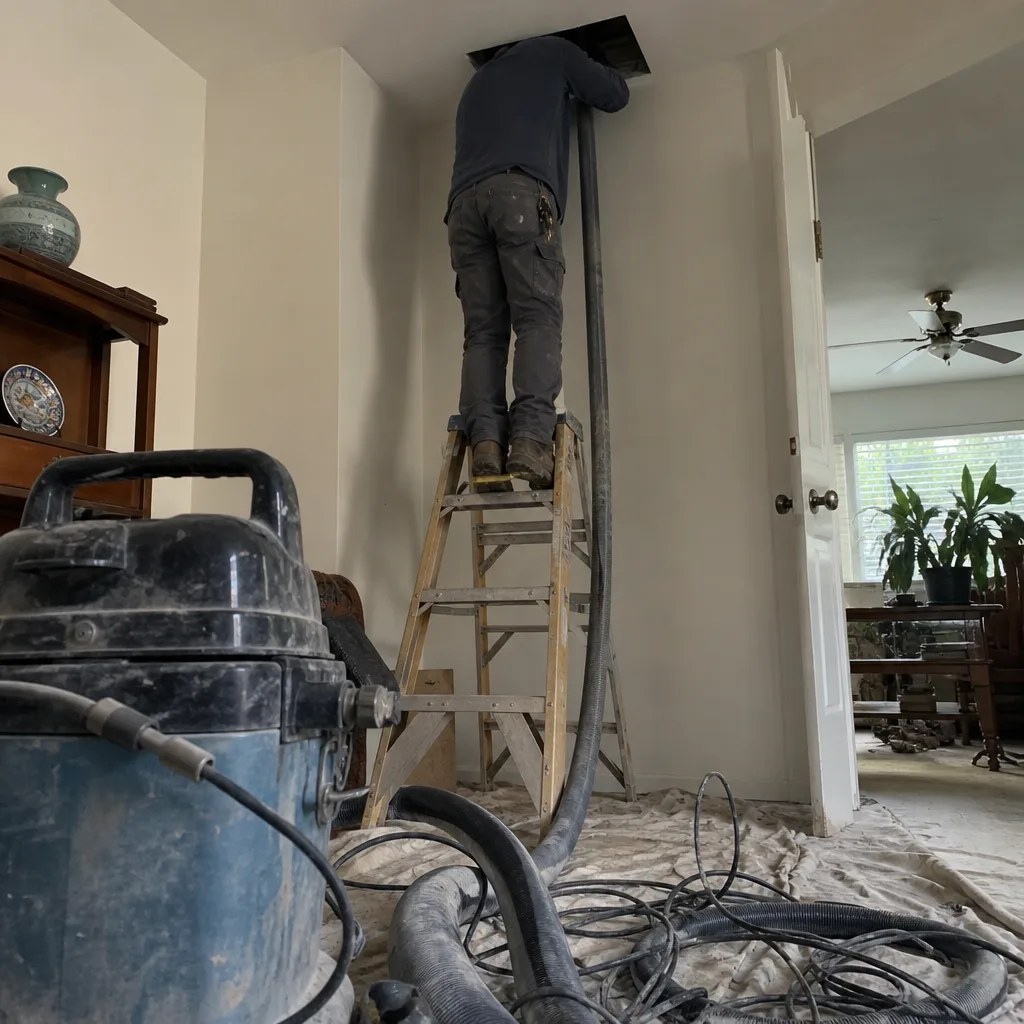 Before
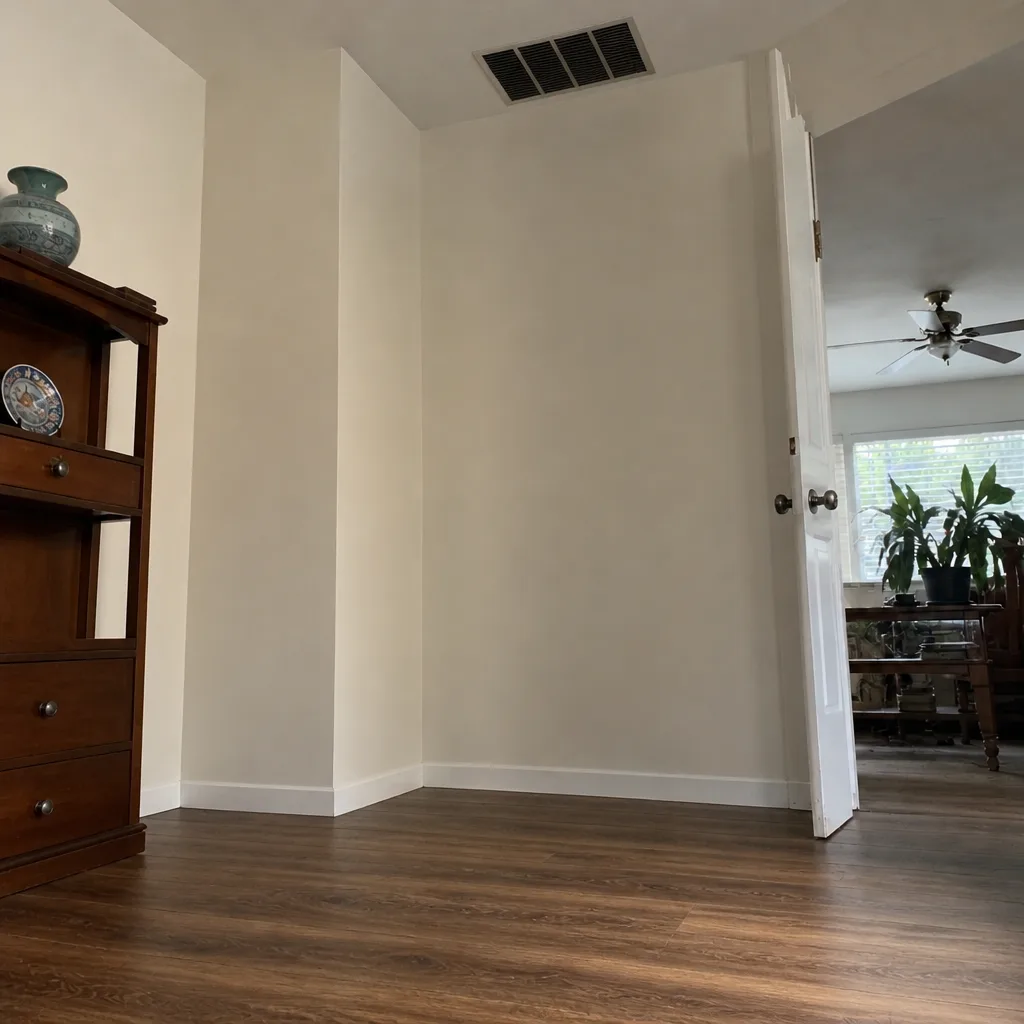 After
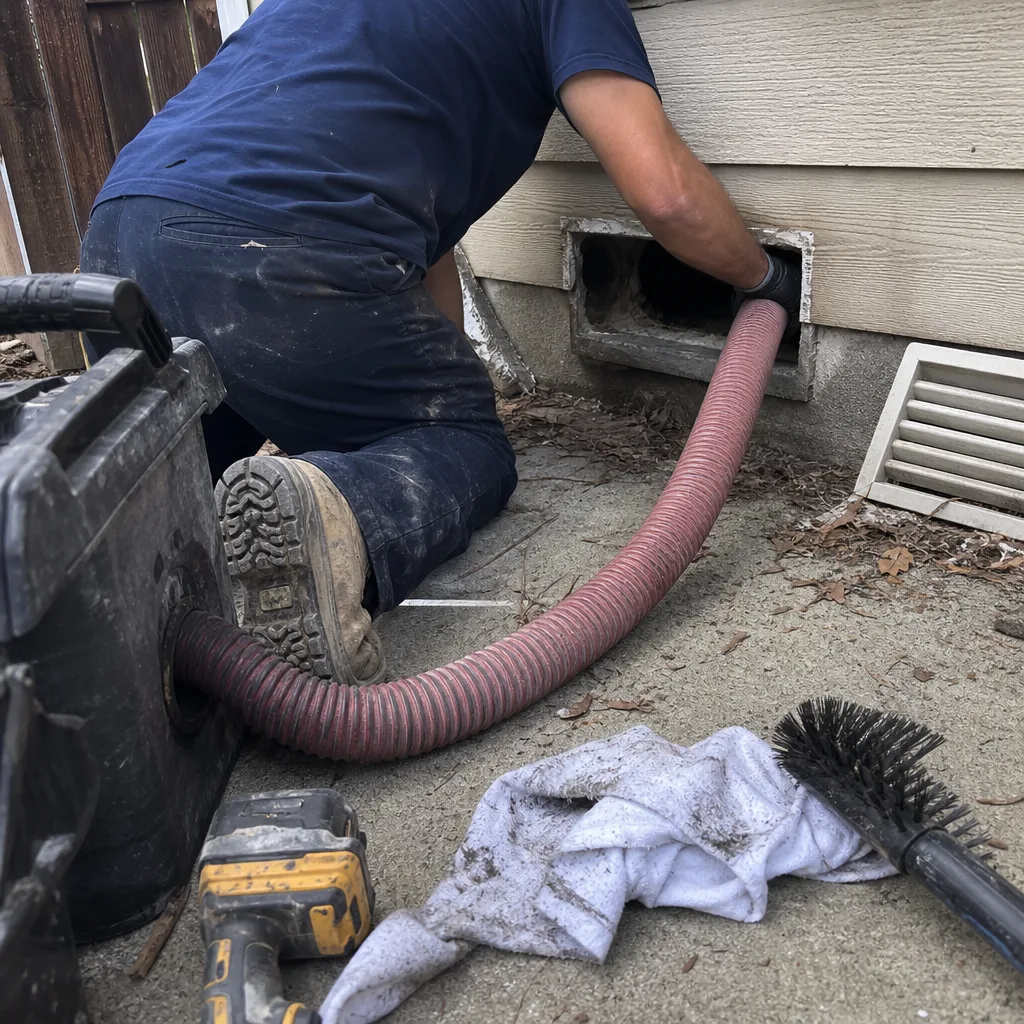 Before
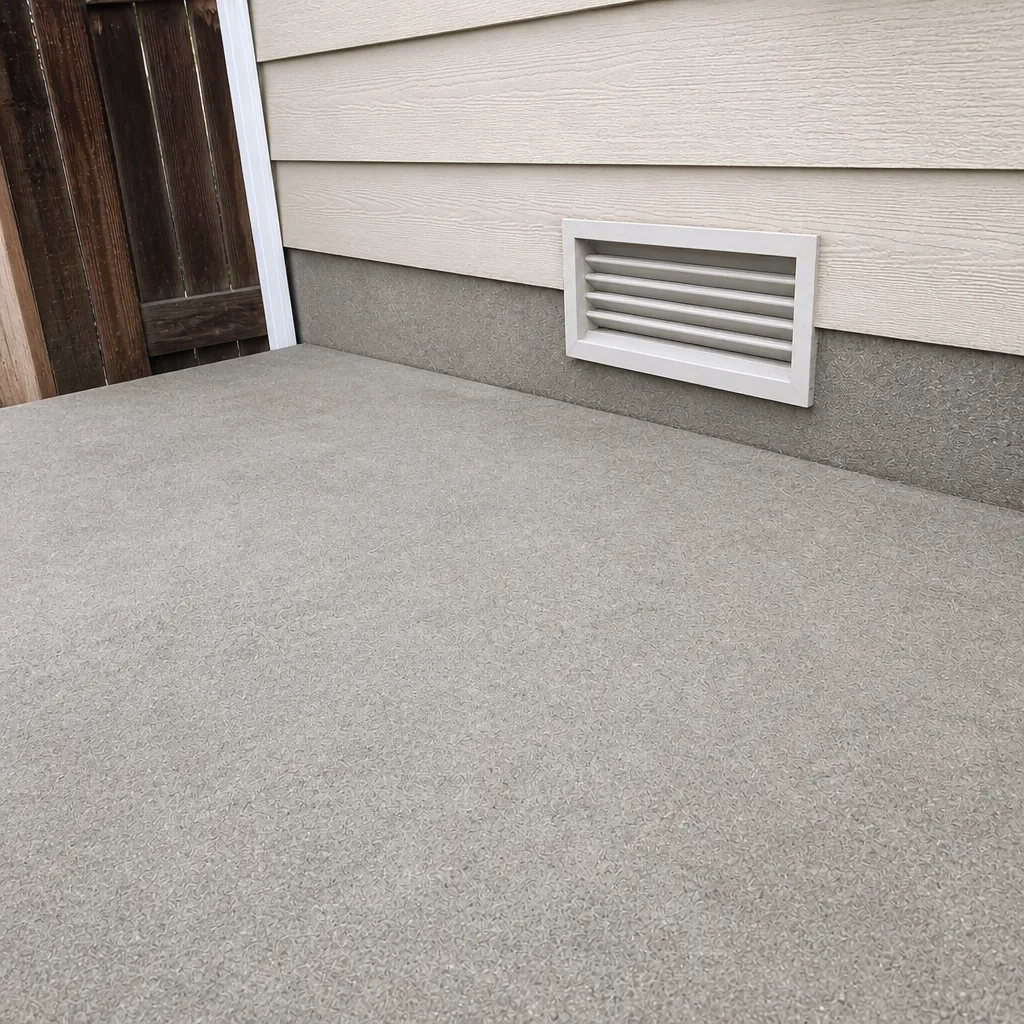 After
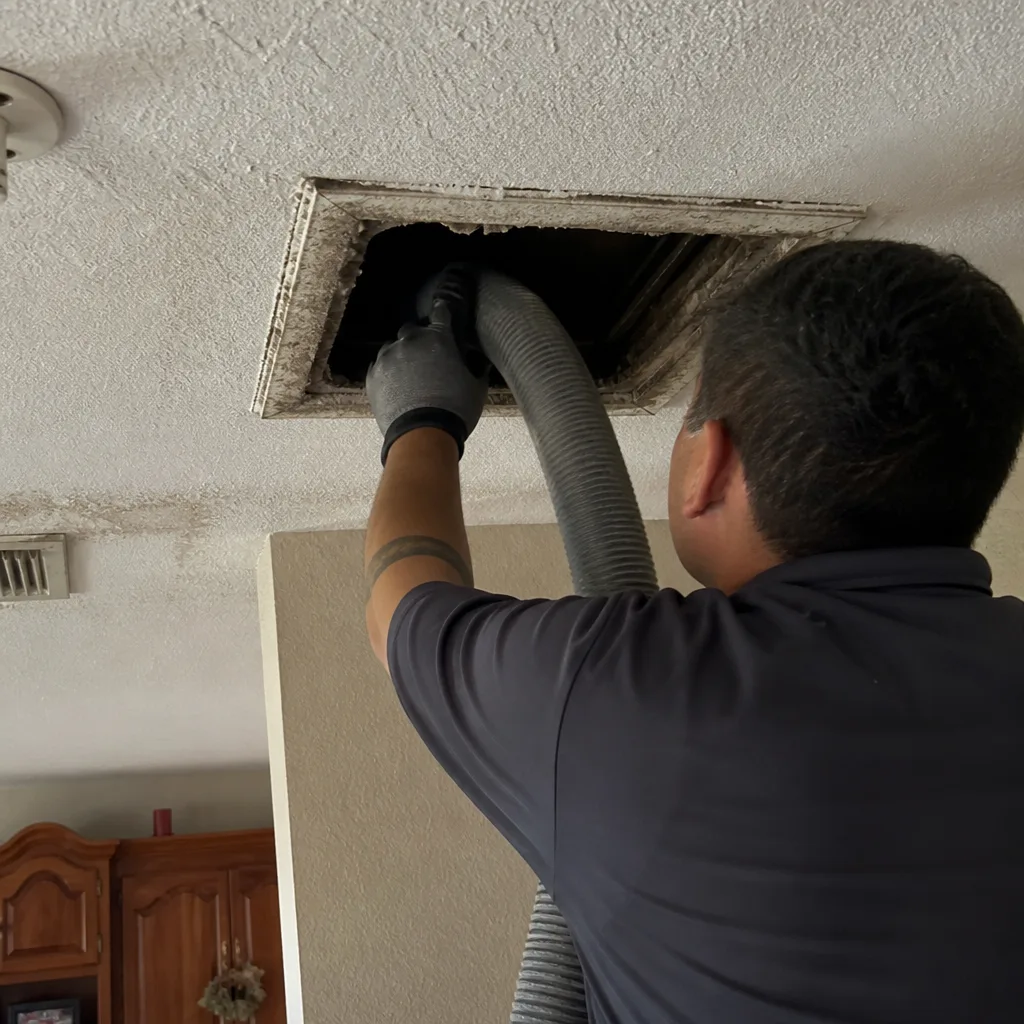 Before
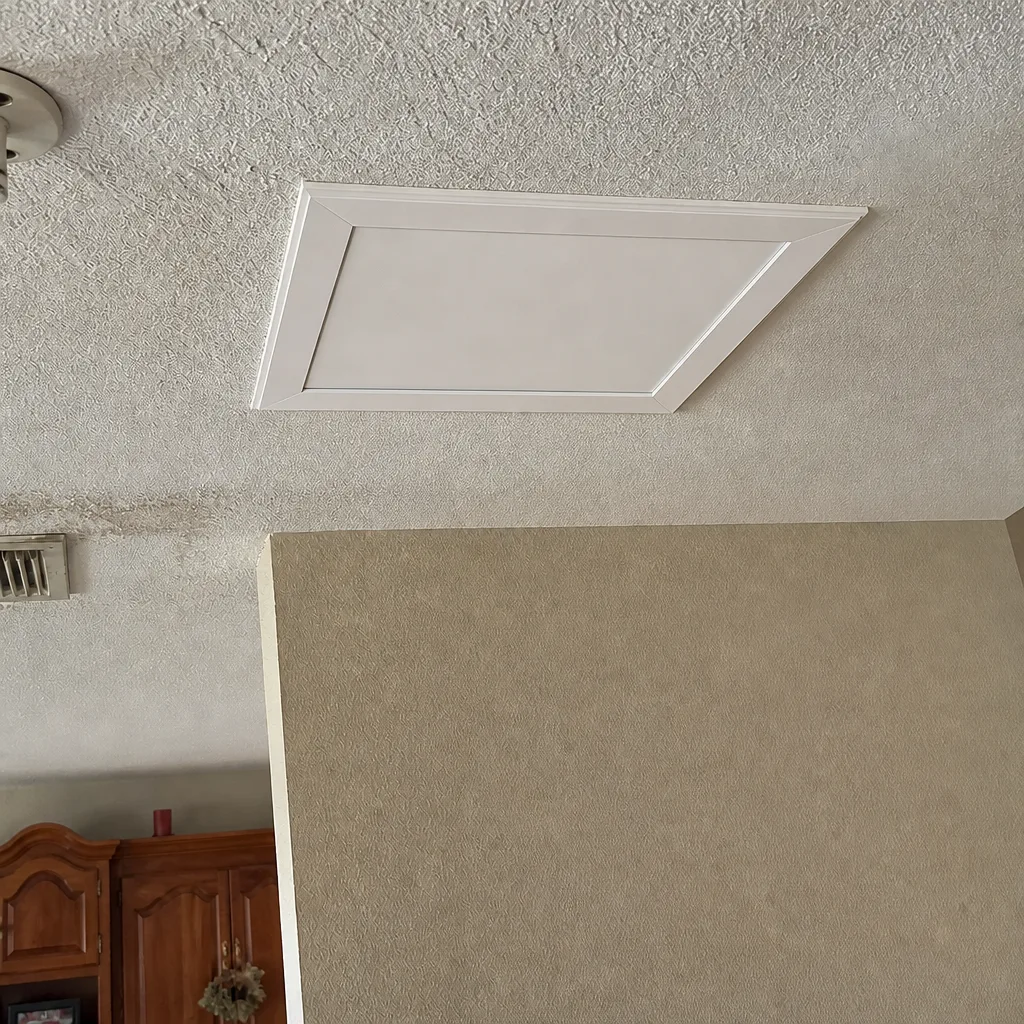 After
When to Call a Professional
Call a professional when your airflow testing points at one branch and the rest of the house is fine. Call when you can hear air where there shouldn’t be any. Call when dust or an attic smell comes back within days of cleaning the house. Call when the filter loads faster than it used to. Call when you’ve never had the return plenum inspected on a home with flexible duct in the attic. Call when the dryer takes more than one cycle or drafts no air at the exterior vent. These are the signals that separate a cleaning job from a repair job, and sorting them correctly is the whole point. Duct Cleaning Modesto offers free estimates in Modesto. Call (866) 256-3971. We answer 24/7.
Frequently Asked Questions
You need duct repair if airflow testing shows one branch that’s much weaker than the rest, if you hear air leaking behind a wall or ceiling, or if a camera inspection finds collapsed, disconnected or pest-damaged flex duct. You need cleaning if airflow is evenly weak across the whole house and the ducts are structurally intact. A free estimate with airflow testing and a camera inspection sorts the two before any work begins.
Professional-grade equipment like Rotobrush rotary brush systems and Nikro negative-air machines, and for containment-grade situations, Abatement Technologies systems. Those are the tools commercial contractors use because they actually remove the debris rather than knock it loose inside the duct run. Ask what machines are coming into your home before you book. A shop vac and a hose is not a duct cleaning service.
Whole-system air duct cleaning in Modesto typically runs $400 to $900 depending on the size of the home, the number of ducts and the condition of the system. Repair or replacement of damaged flex duct is quoted separately. The best way to get an accurate number is a written estimate after a walk-through. Call (866) 256-3971 and we’ll set one up. The estimate is free and the price is set per job by the written estimate.
Usually because the underlying problem wasn’t dust. A breached return plenum pulling attic air, a disconnected branch or a damaged flex duct will recontaminate a system within weeks regardless of how well it was cleaned. That’s why a plenum inspection belongs inside every cleaning estimate, and why the cleaning job should be paired with a repair if damage is found.
Yes, significantly. Leaking or disconnected flex duct means your AC is cooling air that never reaches the rooms it’s meant to. In a Modesto summer, that can push a system to run longer and work harder than it should. Airflow testing and a camera inspection show you whether your ductwork is leaking, and repair work closes those leaks so the system can do its actual job.
Most homes benefit from dryer vent cleaning every 1 – 2 years. Homes with long vent runs, flexible foil or vinyl duct, or heavy dryer use should be serviced on the shorter end. Lint buildup is a fire risk, not a maintenance inconvenience, and cleaning it is a scheduled service rather than an emergency one. Call (866) 256-3971 to schedule a dryer vent cleaning in Modesto and get the shortest run of it done right.
The Bottom Line
Most air duct problems in Modesto trace back to one of three things: debris inside the ducts, damage to the ducts themselves, or a breached seal letting attic air into the system. Cleaning solves the first. Repair solves the second and third. The trick is to sort which one you have before you book, so you don’t pay for a clean on a system that needs a repair. Test airflow at every register. Watch for uneven rooms, dust that comes back fast and attic smells. Understand what valley heat does to flex duct in the attic. Note that a blocked dryer vent is a fire risk and its own service. Call when the checklist points at damage. Clean ducts. Repaired ducts. Safe vents. One call.
Our technicians have up to 13 years of experience working with professional-grade equipment including Rotobrush, Nikro and Abatement Technologies systems, and we work with Aprilaire and Honeywell indoor air quality products when the job calls for them. The tools we use are the same ones pros use on commercial jobs. Call (866) 256-3971 for a free estimate in Modesto. We answer 24/7. Fast dispatch from 7am to 7pm, Sunday through Friday.
Written by the team at Duct Cleaning Modesto.