
Last updated November 15, 2026
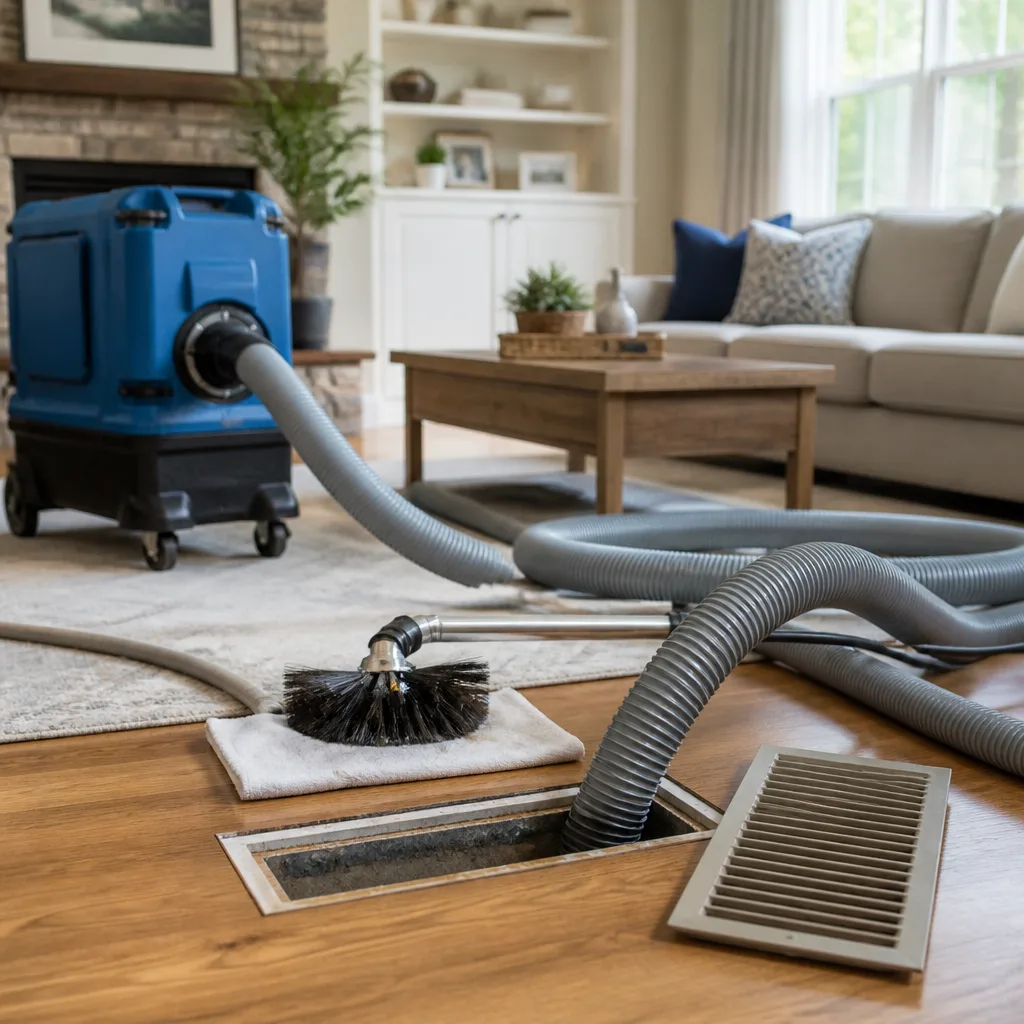 Whole-home duct cleaning
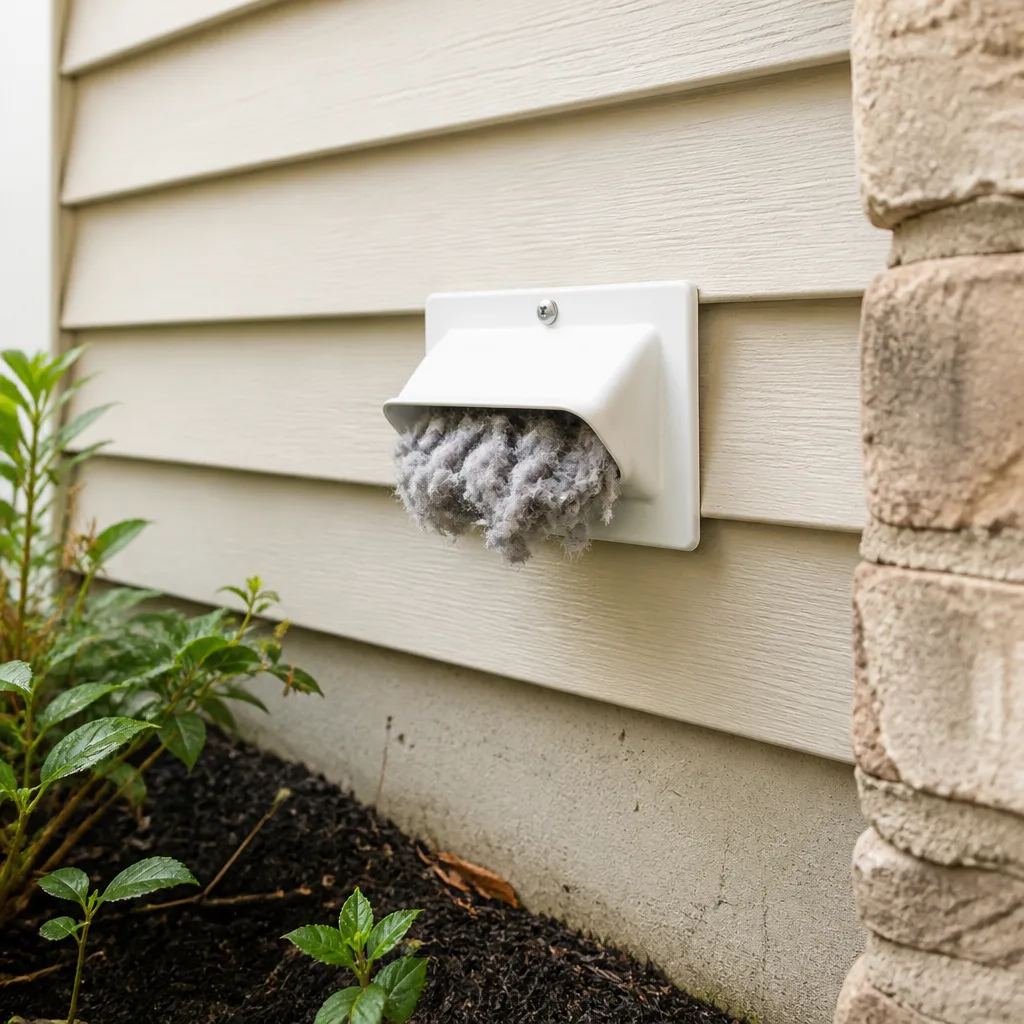 Dryer vent cleaning
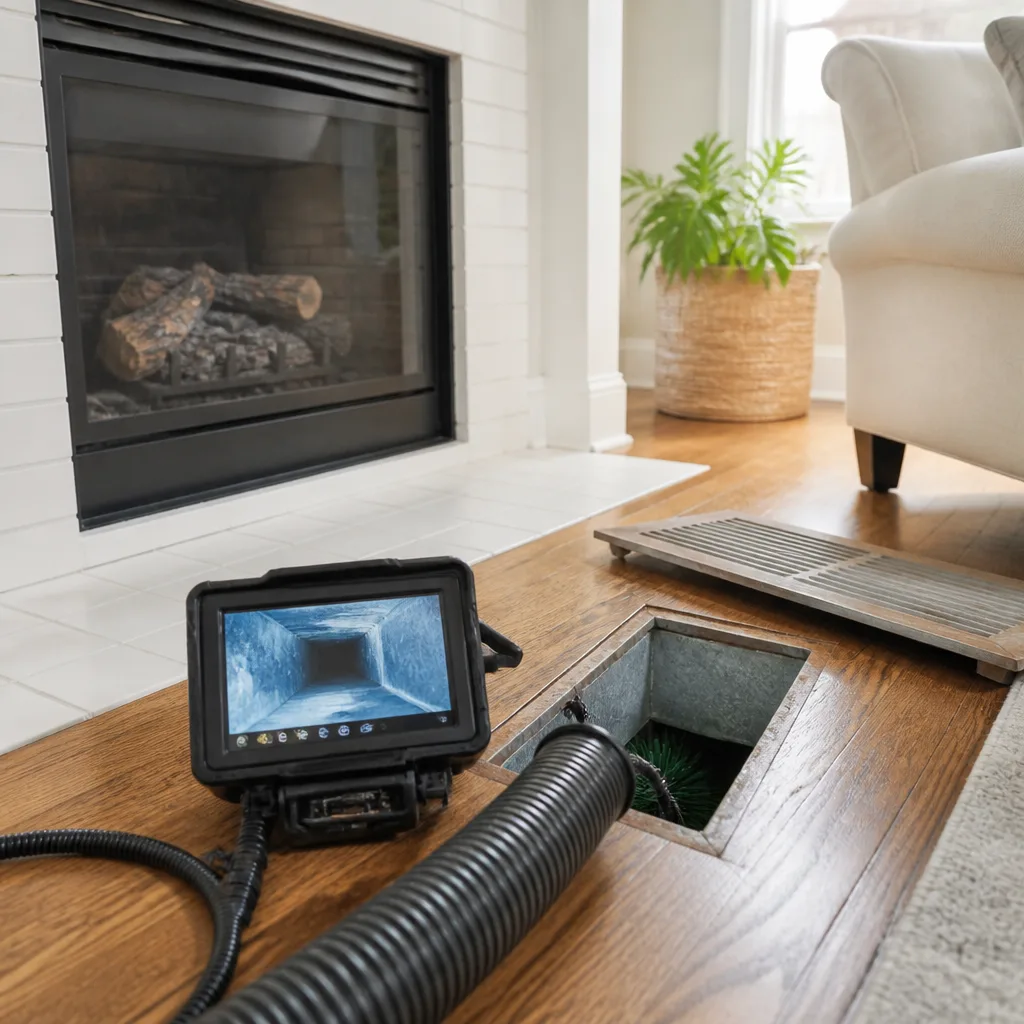 Camera inspection
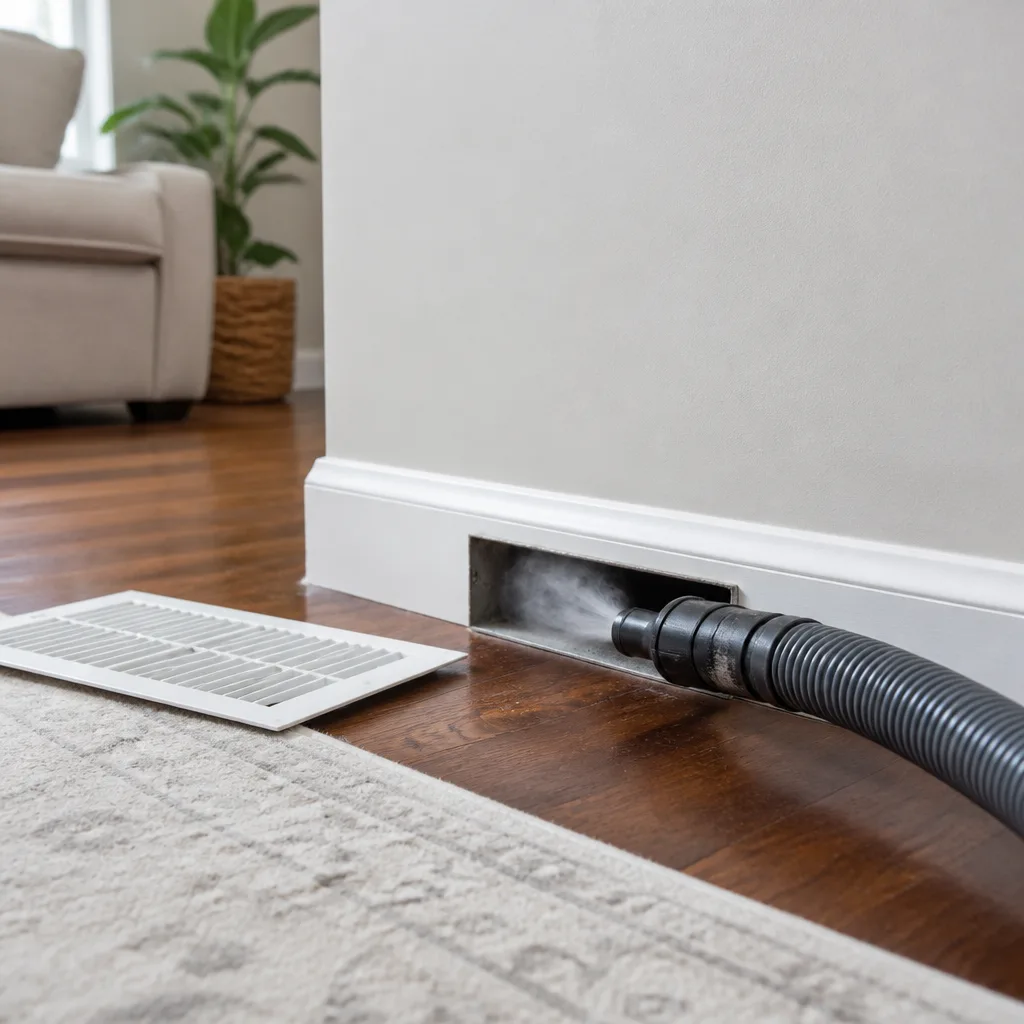 Sanitizing & deodorizing
Whole-system duct and dryer vent check with before-and-after photos - you see exactly what came out of your vents
That "$99 whole-house special" is a bait ad - the real number appears once they are in your hallway, or the "clean" is a shop-vac at the register. We photograph the inside of your ducts before and after instead.
Choosing the Right Air Duct Cleaning Brand: A Buyer’s Guide for Modesto
Any company can register a name that sounds professional. The real brand question is whether they show up with a truck-mounted system rated above 10,000 CFM or a portable unit someone bought at a trade show. A logo on a van tells you nothing about what’s inside it. What matters is the equipment brands the crew actually operates, because a Rotobrush rotary brush system and a shop vac with a sticker on it are not the same tool, and they don’t produce the same result. In this guide, we’ll walk you through how to read a duct cleaning company the way a technician reads it: by the equipment, the documentation, and the local signals that separate a real operation from a marketing page. This is written for Modesto homeowners who want to hire on capability, not on the lowest bid.
Quick Answer
The right air duct cleaning brand in Modesto is the one whose equipment you can verify, whose technicians can show before-and-after video of your own ducts, and whose local operation is traceable to a physical address and DOT-numbered vehicles. Look for professional-grade names like Rotobrush and Nikro on the machines, confirm independent NADCA membership if it’s claimed, and ask for visual documentation of the work. A company that can’t or won’t show you any of that is telling you something.
Styles & brands we work with
- Whole-home duct cleaning
- Dryer vent cleaning
- Camera inspection
- Sanitizing & deodorizing
Table of Contents
- The Equipment Brands That Actually Signal Capability
- What to Look For on a Company’s Equipment, Not Their Website
- How Equipment Investment Predicts Work Quality
- What NADCA Membership Actually Requires and How to Verify It
- Local Business Indicators That Matter in Modesto
- Using Before-and-After Video to Filter Out Weak Companies
- Duct Repair and Dryer Vent Safety: The Services That Reveal a Real Specialist
- The Questions to Ask Before You Book
The Equipment Brands That Actually Signal Capability
In duct cleaning, the equipment brands a company runs tell you more about their capability than any About Us page. There are a handful of names that show up on professional-grade machines, and they represent fundamentally different tiers of work. When you see them, it’s not a guarantee, but it’s a strong signal that the company invested in real capability. When you don’t, ask what they use instead.
Here’s what the key names actually mean:
- Rotobrush – Rotary brush systems that physically agitate duct walls to loosen debris before extraction. This is the workhorse of residential duct cleaning, and a company running Rotobrush equipment is doing more than vacuuming surface dust.
- Nikro – Negative-air machines that create pressure differentials to pull contaminants out of the system rather than pushing them back into your living space. This is containment-grade equipment, not a consumer shortcut.
- Abatement Technologies – Containment-grade systems typically associated with remediation-level air quality work. When a company has this equipment on hand, it signals they can handle situations that go beyond routine cleaning.
- Aprilaire and Honeywell – Indoor air quality product lines. A company that stocks and works with these is positioned to have a full air quality conversation, not just a one-off duct clean.
The contrast matters. A shop vac with a logo sticker and a portable unit bought secondhand can move air, but they can’t create the negative pressure or the physical agitation that professional systems do. In Modesto’s dry summer climate, where dust and pollen load up ductwork through the cooling season, extraction capability isn’t a luxury. If you’re comparing companies, ask what machines they’ll actually bring into your home. The answer separates a real operation from a marketing one.
What to Look For on a Company’s Equipment, Not Their Website
A company’s website can say anything. Their equipment can’t. The problem is that most homeowners never see the equipment before it’s already in the driveway. Here’s how to change that, step by step:
- Ask for a photo of the equipment before you book. A legitimate company will send one without hesitation. What you’re looking for is a machine with a visible brand nameplate, not a repurposed shop vac.
- Ask what the CFM rating is. Truck-mounted systems produce far more airflow than portable units. If the technician can’t tell you what their machine is rated for, that’s an answer too.
- Look at the hose and tooling. Professional rotary brush systems use specific attachments for different duct types. A single generic nozzle is a sign the work will be generic.
- Ask whether they use negative-air containment. A Nikro machine pulls debris out under negative pressure. If they don’t use one, ask how they keep debris from blowing into your rooms.
- Check what they bring for air quality follow-up. Companies working with Aprilaire or Honeywell have a path forward if your ducts are contributing to indoor air problems.
None of this requires you to become an equipment expert. You just need to ask the questions and listen. A technician who knows their gear will answer them in plain language. In our experience, the companies that get defensive about equipment questions are the ones with the least to show. For more detail on what a professional job actually involves, see our guide to air duct cleaning.
How Equipment Investment Predicts Work Quality
Here’s the logic that most buyers skip: a professional duct cleaning setup is a serious capital investment. A rotary brush system, a negative-air machine, good hose and tooling, and the vehicle to carry it all represent real money. That equipment depreciates every year, and it only makes business sense if a company is doing enough volume at a high enough standard to pay for it. A company running a shop vac has almost no capital at risk, which means they have almost no reason to keep quality high. They can walk away from a bad job and lose very little.
The depreciation math works the same way for any trade. A company that bought a real machine has a monthly cost of ownership whether they work or not. That cost forces discipline: proper lead handling, trained operators, documented results. A company that didn’t buy one is competing on price alone, and price-only competition almost always ends with the customer holding the short end.
For homeowners in Modesto, this math matters because it filters out the bids that look too good. A very low quote usually reflects a very low equipment baseline, and the work that follows matches it. You don’t have to pay the highest price in town, but you should be paying for something that was actually built to do the job. That’s the real cost breakdown to look for.
What “Real Equipment” Looks Like in Practice
Professional-grade gear has visible brand markings, service records, and operators who can explain how it works. Consumer shortcuts look different: modified vacuums, improvised hoses, and technicians who can’t explain the process when asked. If the tools look improvised, the results probably will be too.
What NADCA Membership Actually Requires and How to Verify It
NADCA stands for the National Air Duct Cleaners Association, and it sets standards for how duct cleaning should be done. Membership isn’t a gold star on a website – it’s a commitment to a professional standard of practice, and it requires real work to maintain. When a company claims NADCA membership, you can and should verify it independently rather than taking the claim at face value.
Here’s how to check:
- Visit NADCA’s website directly and search their member directory by company name or by location.
- Match the company name exactly – variations in spelling or a slightly different business name are a red flag.
- Ask the company for written confirmation of their membership status, not just a logo on the page.
- Ask what specific NADCA standards they follow on a job, such as source-removal practices and containment procedures.
Membership signals that a company has agreed to follow a defined standard, trained to it, and kept pace with changes to the trade. It doesn’t replace your own diligence, but it removes some of the guesswork. Companies that aren’t members can still do good work, but they have no external standards body holding them to it. In Modesto’s market, where plenty of operators come and go, an independently verifiable standard is a useful filter.
Local Business Indicators That Matter in Modesto
Local signals tell you whether a company is rooted here or just passing through. In a market with as many new operators as Modesto’s, this matters. Here’s what to check:
- A physical address. A real business has a location you can find, even if technicians work from vehicles. A PO box and a phone number alone is thin.
- DOT numbers on vehicles. Commercial vehicles that haul equipment and work across state lines are typically marked with DOT numbers. Ask whether their vehicles carry them – it indicates a properly registered operation.
- Years at the same location. A company that has stayed put has local roots, references, and a reputation to protect. A new registration with a fresh address is not automatically bad, but it’s a question worth asking.
- Local review patterns. Do the reviews mention specific Modesto neighborhoods like La Loma, College Area, or the areas near Vintage Faire? Patterns that mention real local streets and landmarks are harder to fake than generic praise.
- Knowledge of the local housing stock. Modesto has a mix of older homes with original ductwork and newer construction with different systems. A company that understands both can tailor the work. You can read more about the local market on our Modesto page.
These indicators won’t tell you everything, but they’ll rule out the operators who are here for a season and gone the next. Ask the questions. The answers are usually more illuminating than the marketing copy.
Using Before-and-After Video to Filter Out Weak Companies
Before-and-after video is the single most useful request you can make. It’s also the fastest way to filter out companies whose work won’t survive visual evidence. A real job produces visible change: debris cleared from duct interiors, clean plenum surfaces, and a system that looks different after the work than before. A company that can’t produce video is telling you their work may not hold up to that test.
Here’s how to make the request effectively:
- Ask upfront, before booking. The request itself filters companies. Good ones say yes immediately. Weak ones stall.
- Specify that you want to see your own ducts. Stock footage of a cleaning job proves nothing. Your specific system is what matters.
- Ask for the video before they leave. That’s when it’s easiest to capture and when it’s most trustworthy.
- Look for consistency. The “after” footage should show the same sections captured in the “before.” Anything else is a highlight reel.
Video documentation also protects you against the bait-and-switch problem that makes this industry hard to trust. If you have a visual record of what was there before and after, you can tell whether the price you paid matched the work you got. For anyone comparing quotes, this is the most concrete way to hold a company to a standard. It’s also something we build into every job we do in Modesto.
Duct Repair and Dryer Vent Safety: The Services That Reveal a Real Specialist
Plenty of companies clean ducts. Far fewer can also repair them. That gap is a tell. Ductwork gets damaged over time – disconnected joints, crushed sections, torn insulation. Cleaning around a damaged duct doesn’t fix the problem; it just makes a clean duct that still leaks. A real specialist can diagnose and repair the system, not just vacuum it. That’s the difference between working around the problem and working on it.
The second tell is dryer vent cleaning. Lint buildup in dryer vents is one of the leading causes of residential fires, and it’s a service that too many companies treat as an add-on. A company that offers it as a dedicated safety service understands the risk and can address it properly. That’s not just air quality – it’s fire prevention. We treat it as its own service, and you can see what that involves in our dryer vent cleaning guide.
If you’re evaluating a Modesto company, ask two questions: can you repair damaged ducts, and do you offer dryer vent cleaning as a standalone service? If the answer to either is no, you’re likely talking to a company with a narrower toolbox than their website suggests. The best air duct cleaning company in Modesto CA is one that treats the whole system as its responsibility.
Why Guardsman Finishing Matters
Some companies apply a protective finish after cleaning. Guardsman-brand products are used for that purpose, sealing and protecting surfaces that have been cleaned. It’s a small detail that indicates a complete process, not just a pass with a vacuum. Ask whether finishing is part of the job or an extra.
The Questions to Ask Before You Book
You don’t need a technical background to hire well. You need a short, well-chosen list of questions. Here’s ours:
- What equipment will you bring into my home? Look for named brands and a CFM rating.
- Are you NADCA members, and can I verify that? Ask for the listing, then check it independently.
- Will I get before-and-after video of my own ducts? The answer should be immediate.
- Can you repair damaged ductwork, or just clean it? A specialist thinks about the whole system.
- Do you offer dryer vent cleaning as a separate service? It’s a fire-prevention service, not a sales add-on.
- Is the price per job or per vent? A flat price per system, agreed in writing before work begins, is what you want.
- What’s your physical address and are your vehicles DOT-numbered? Local roots matter.
Ask these before booking, and you’ll screen out most of the market. At Duct Cleaning Modesto, we answer all of them as a matter of course, and we back the answers with a free estimate and a written flat price per system. Our technicians have up to 13 years of experience with Rotobrush, Nikro, and Abatement Technologies equipment, and we work with Aprilaire and Honeywell air quality products. Call (866) 256-3971. We answer 24/7. Fast dispatch from 7am to 7pm, Sunday through Friday.
Common Mistakes to Avoid
Here are the mistakes we see most often when Modesto homeowners hire for duct cleaning:
- Choosing on price alone. The cheapest quote usually reflects the cheapest equipment. A shop vac and a portable unit can’t do what a truck-mounted system does, and you’ll feel the difference in your air quality and your energy bill.
- Not asking to see the equipment. Website claims are easy to make. A photo of a nameplate or a look at the truck before the job starts is harder to fake. Ask first.
- Accepting a per-vent price. Per-vent pricing encourages speed over thoroughness, and it can balloon quickly once a technician is on site. A flat price per system, fixed in writing, keeps the incentive where it belongs.
- Skipping the NADCA check. Any company can put a logo on a page. Take the extra minute to search the NADCA directory yourself. It’s quick, and it’s definitive.
- Not requesting video. Without a before-and-after record of your own ducts, you have no way to verify what was done. Ask before booking, and ask for it again before they leave.
- Ignoring the dryer vent. It’s the same visit and a fraction of the cost of a fire. Treating it as optional is a mistake Modesto homeowners can’t afford.
- Overlooking signs of duct damage. Crushed or disconnected ducts don’t clean up. They need repair. If a company can’t diagnose that, they’ll clean around a problem that keeps costing you.
See the difference
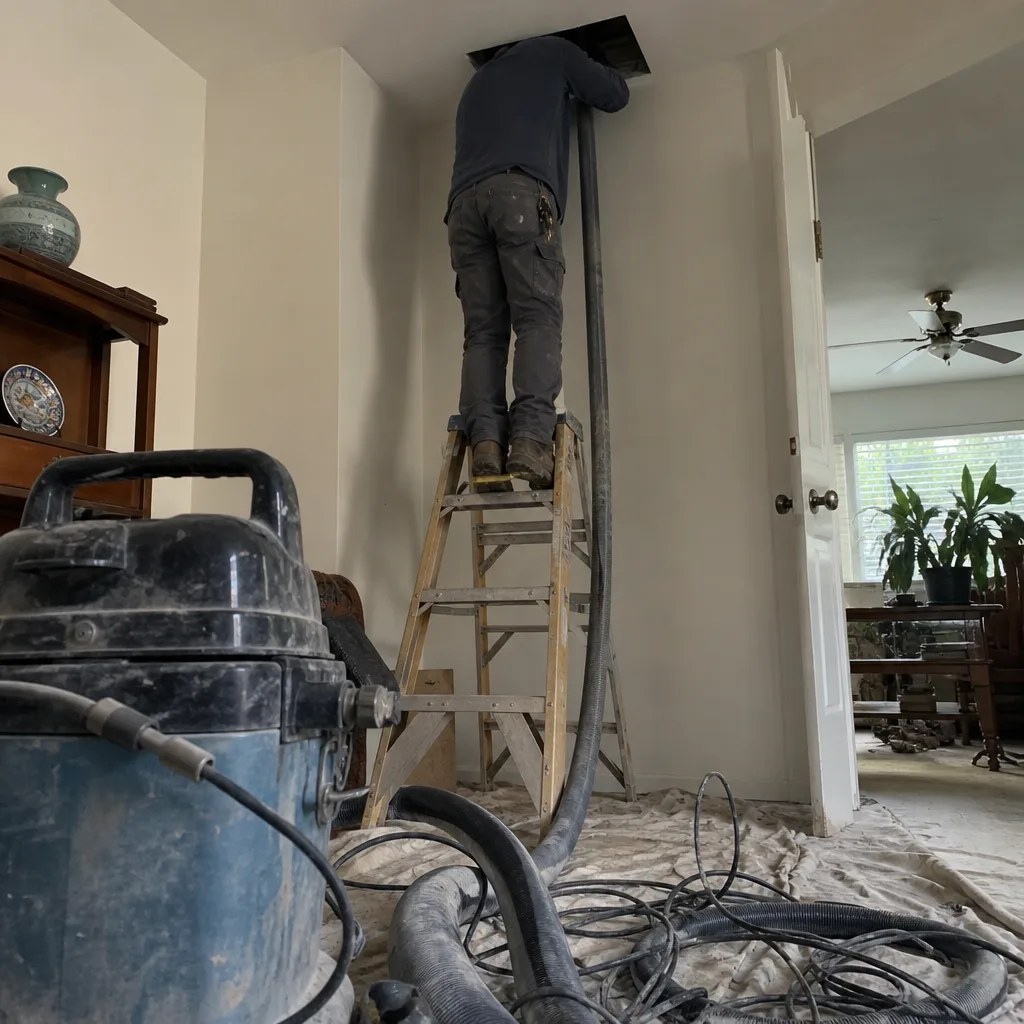 Before
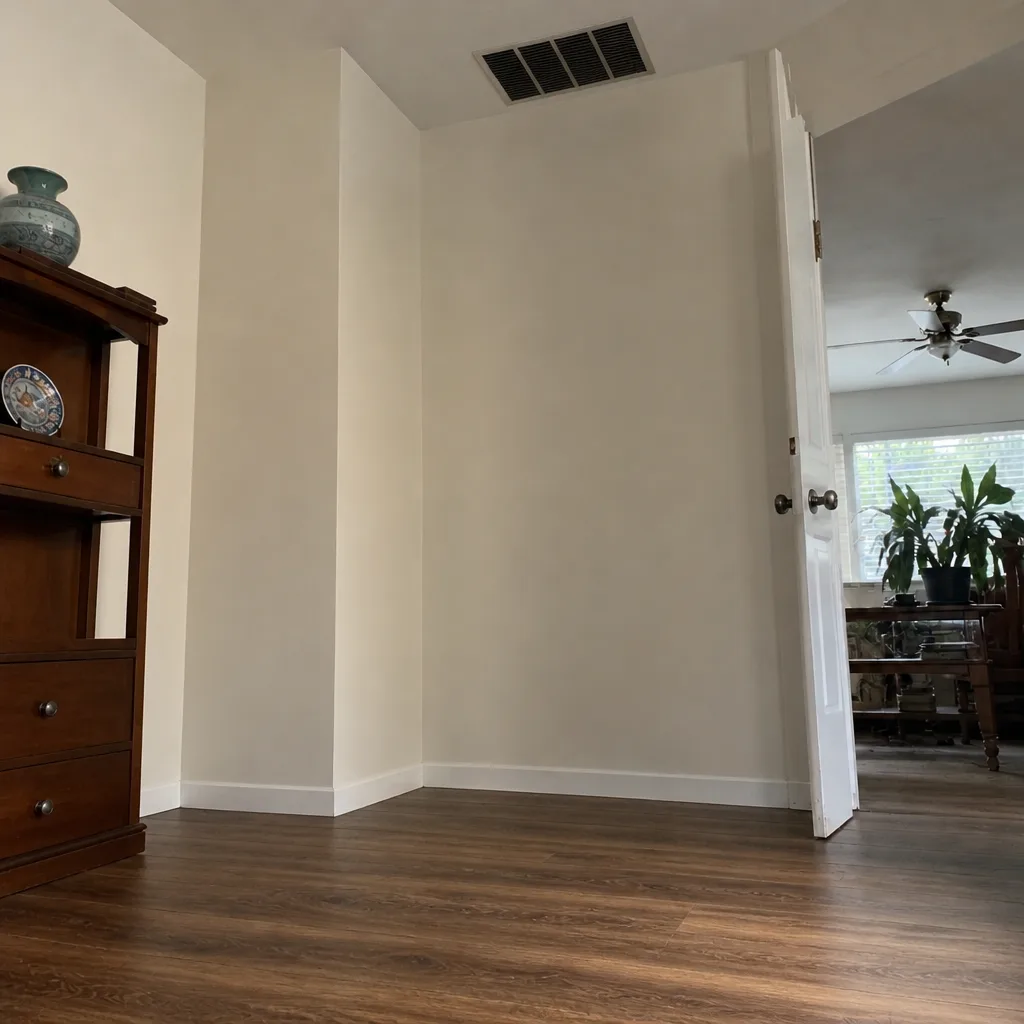 After
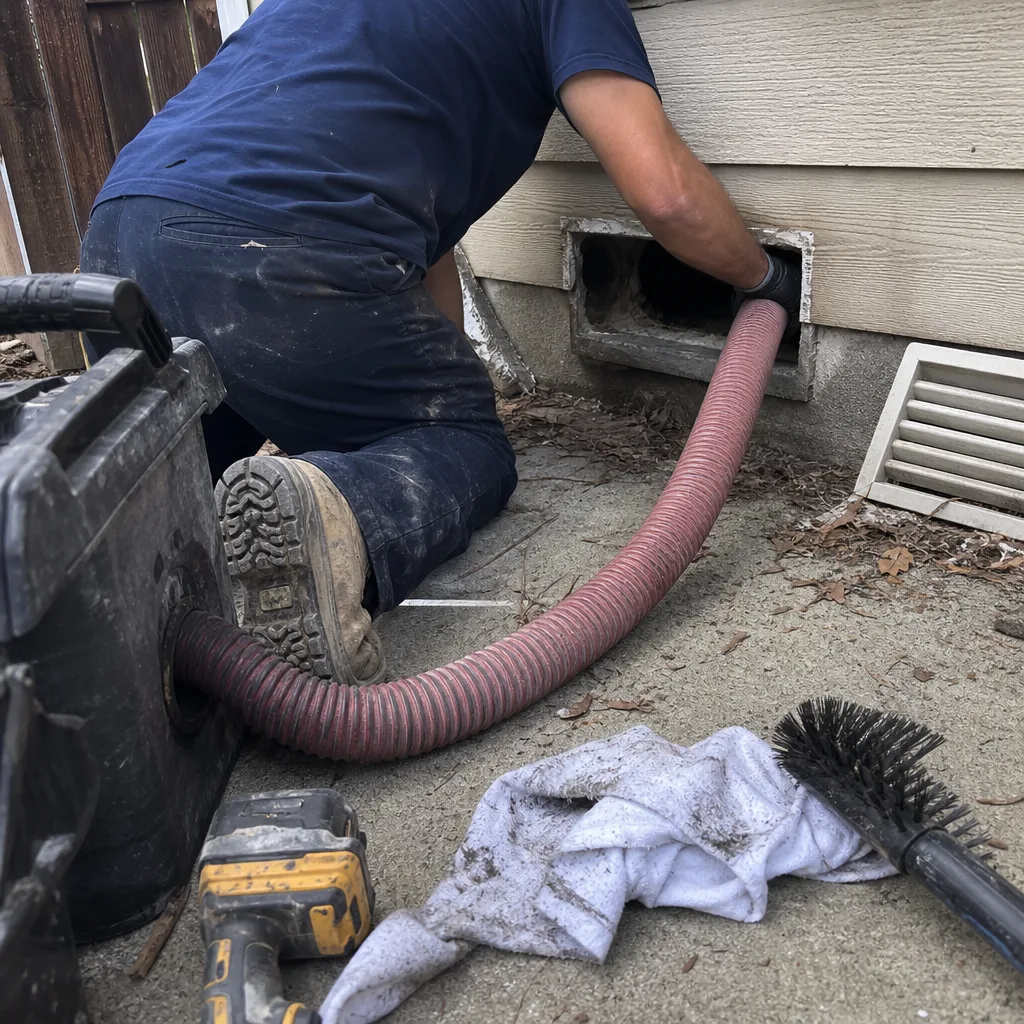 Before
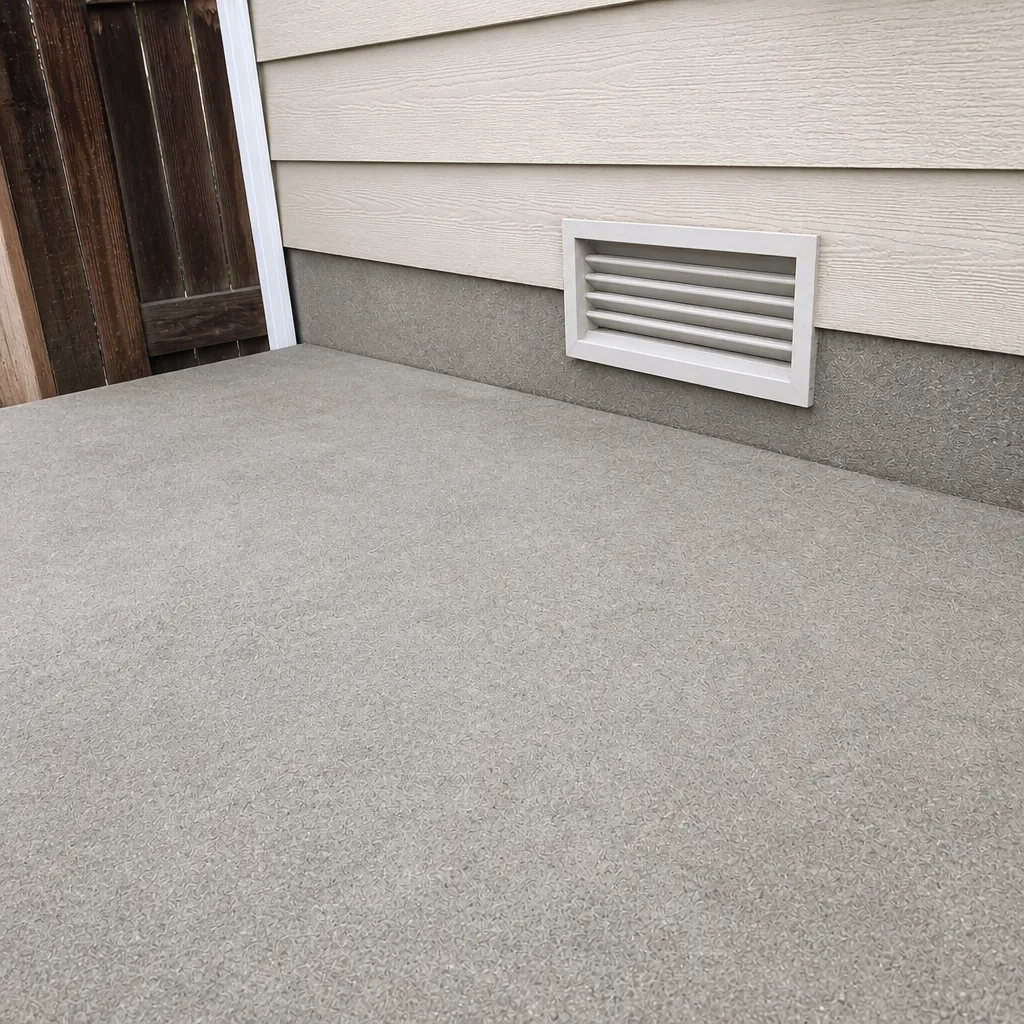 After
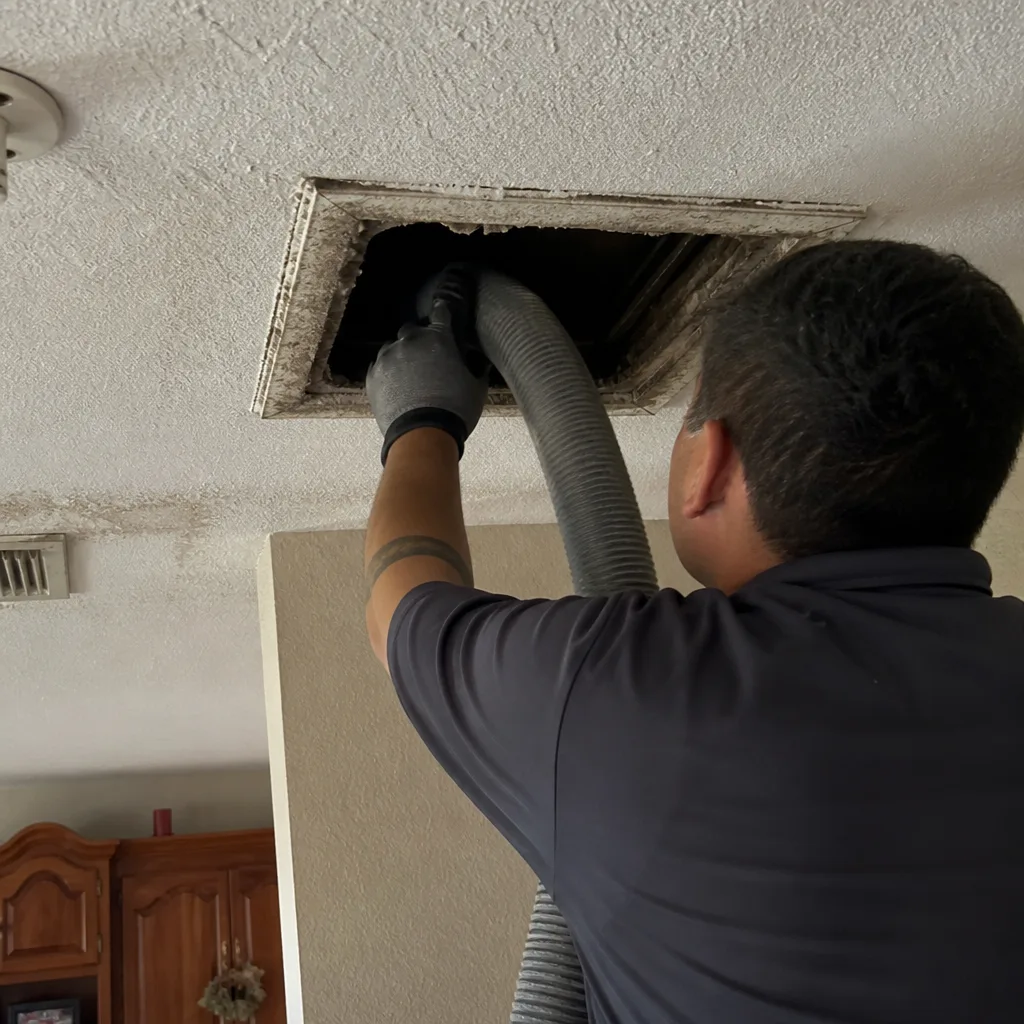 Before
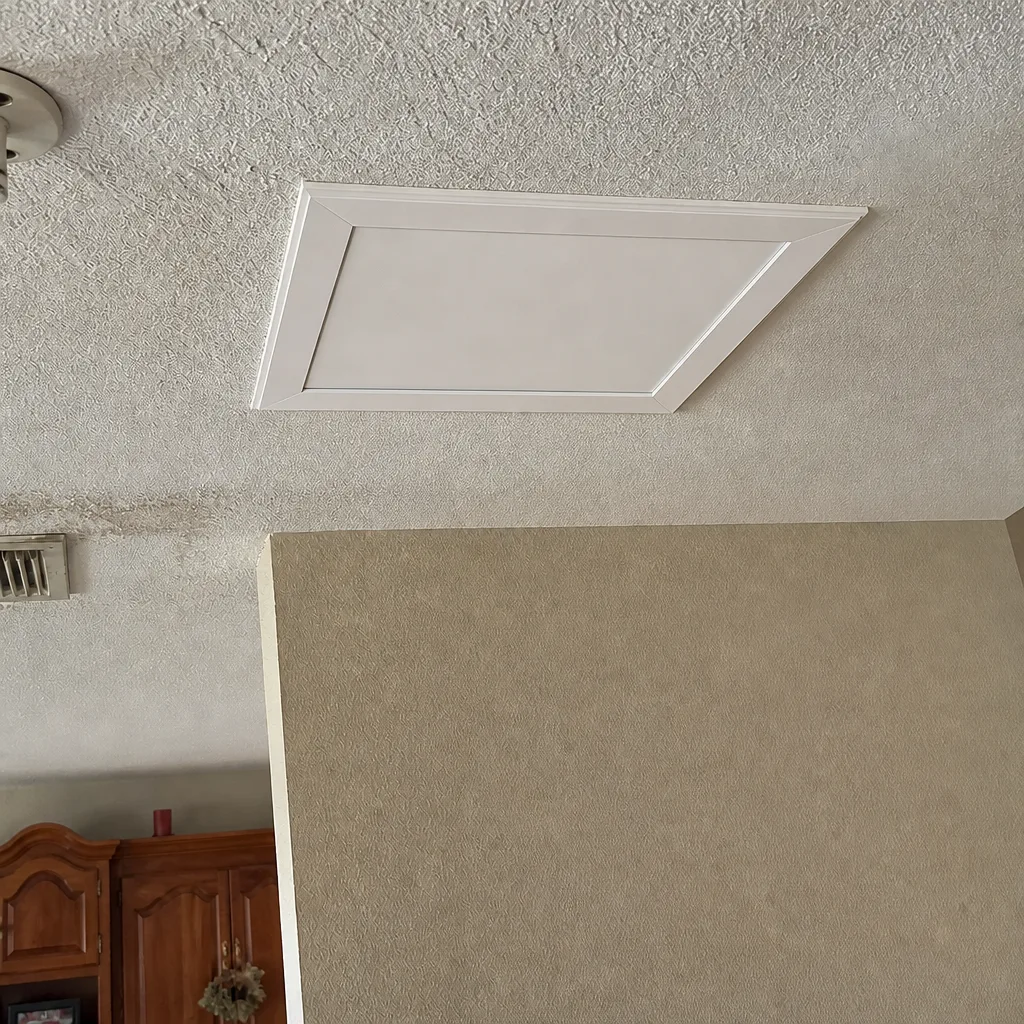 After
When to Call a Professional
Some duct issues are easy to put off and some aren’t. Call a professional when you’re seeing visible dust blowing from vents shortly after a clean, when your energy bills climb without an obvious explanation, or when different rooms in the house heat and cool unevenly. These are signs of a system-level problem that a regular cleaning won’t fix. Call sooner if you’ve noticed lint buildup around the dryer vent, a dryer that takes longer to dry clothes, or a burning smell when the dryer runs – those are safety issues, and they should be addressed before anything else. Damage is another trigger: crushed, disconnected, or torn ductwork needs repair, not just cleaning. If you’re unsure whether your situation qualifies, ask. Duct Cleaning Modesto offers free estimates in Modesto – call (866) 256-3971. We answer 24/7. Fast dispatch from 7am to 7pm, Sunday through Friday.
Frequently Asked Questions
Ask for a photo of the machine before you book, and ask for the CFM rating. A real professional setup has a visible nameplate and a technician who can explain it. Look for names like Rotobrush, Nikro, or Abatement Technologies, and don’t accept vague answers. If they can’t tell you what they run, that’s your answer.
NADCA membership requires a company to agree to a professional standard of practice, train to it, and maintain it over time. You can check it yourself by searching the NADCA member directory by name or location. If a company claims membership and you can’t find them in the directory, treat the claim as unverified. Call (866) 256-3971 for a free estimate – our team can walk you through how we work.
Cheap quotes usually reflect cheap equipment. A company running a shop vac and a portable unit has almost no capital invested, so they can quote low and still turn a profit. That equipment can’t create the negative pressure or physical agitation that professional systems do, so the work looks like cleaning but isn’t. A flat price per system from a company with real equipment costs more upfront and delivers the result you’re actually paying for.
Ask for before-and-after video of your own ducts, captured on the same visit. A company confident in its results will produce it without hesitation. A company that can’t is telling you something about how well their work would hold up to visual evidence. We document every job in Modesto this way.
Most homes benefit from a cleaning every few years, but it depends on your system, your household, and what’s getting into the ducts. Homes near Modesto’s dry, dusty summer air and heavy pollen seasons tend to load up faster. If you’ve had recent renovations, pets, or visible dust blowing from vents, call for an assessment. Call (866) 256-3971 for a free estimate – we’ll tell you honestly whether you’re due.
We repair damaged ducts as well as clean them. Crushed, disconnected, or torn ductwork needs repair before cleaning can do much good, and a company that can’t handle both will clean around a problem that keeps costing you. Ask any company you’re considering whether repair is something they actually do. If it isn’t, look for a specialist.
The Bottom Line
Choosing a duct cleaning company in Modesto comes down to a few verifiable things. Look at the equipment brands, not the website. Ask for before-and-after video of your own ducts and treat a refusal as a red flag. Verify NADCA membership independently instead of trusting a logo. Check for a real physical address, DOT-numbered vehicles, and local roots that show up in review patterns. Avoid per-vent pricing and insist on a flat price per system agreed in writing before work starts. None of this requires technical expertise – it requires asking the right questions and listening to the answers. Companies with real capability will answer them comfortably. The rest will filter themselves out. To start with a free estimate, reach the Duct Cleaning Modesto team at (866) 256-3971. We answer 24/7. Fast dispatch from 7am to 7pm, Sunday through Friday.
Written by the team at Duct Cleaning Modesto.