
Last updated November 15, 2026
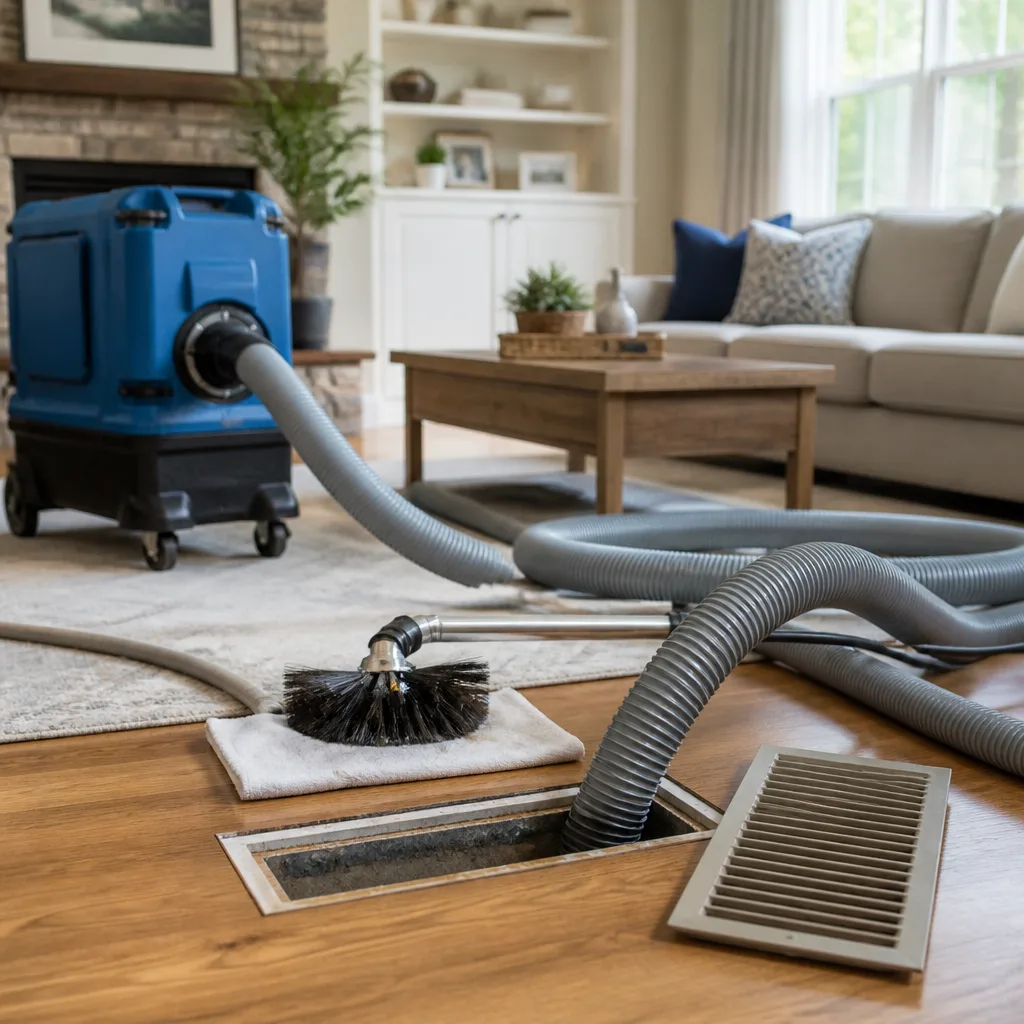 Whole-home duct cleaning
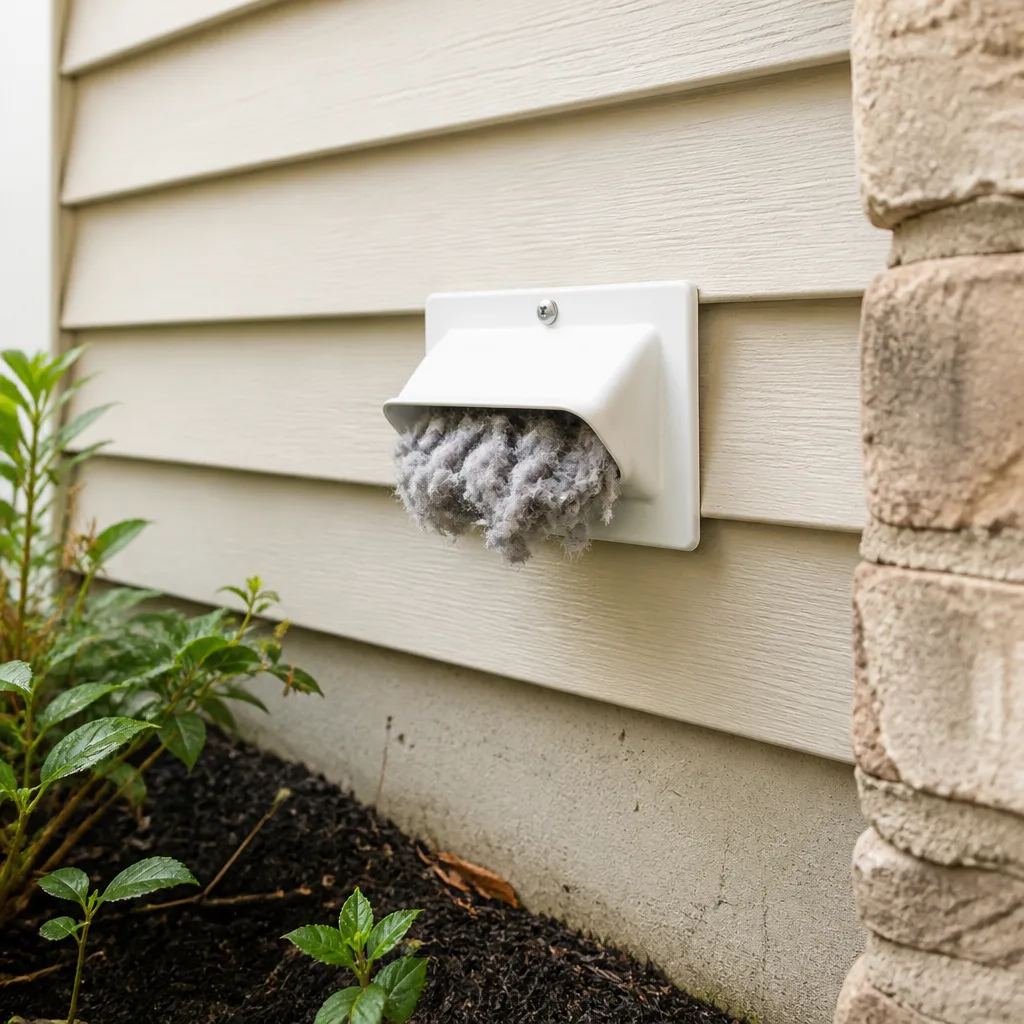 Dryer vent cleaning
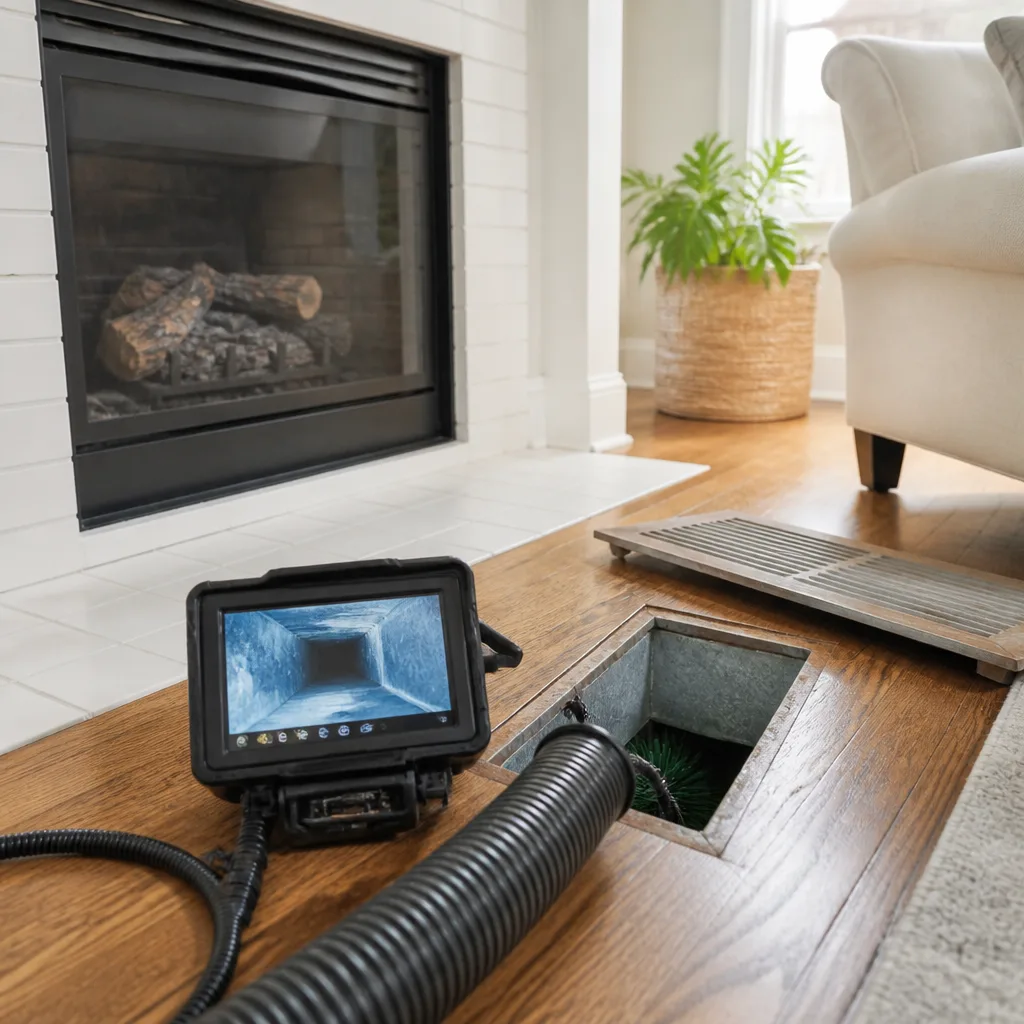 Camera inspection
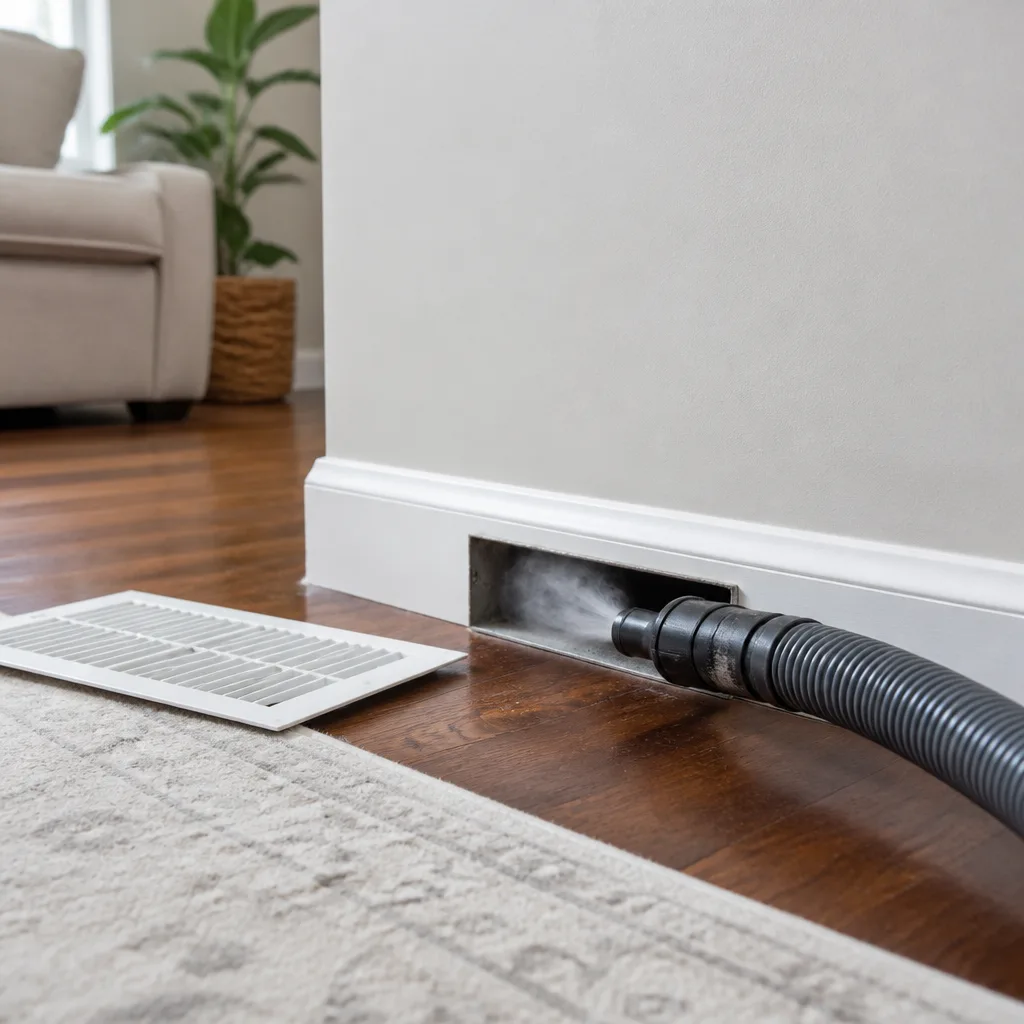 Sanitizing & deodorizing
Whole-system duct and dryer vent check with before-and-after photos - you see exactly what came out of your vents
That "$99 whole-house special" is a bait ad - the real number appears once they are in your hallway, or the "clean" is a shop-vac at the register. We photograph the inside of your ducts before and after instead.
DIY vs Professional Air Duct Cleaning: The Modesto Homeowner’s Decision Guide
A dryer vent brush kit costs about what a decent dinner out costs, and 45 minutes with it can clear enough lint to meaningfully cut a real fire risk in your home. That’s a legitimate DIY job, and we’ll defend it. Cleaning the inside of your supply ducts with the same DIY logic is where the thinking breaks down. A shop vacuum doesn’t remove contamination from a branch run – it aerates it and, more often than not, pushes the loosest material deeper into the system while sending the fine stuff back into the room you’re standing in. This guide draws the line precisely between what a Modesto homeowner can genuinely do well and what physically can’t be done without industrial equipment, so you don’t waste money on either end of the spectrum.
Quick Answer
Homeowners can and should handle register cleaning, filter changes, filter housing wipe-downs, and routine dryer vent lint removal. Everything inside the duct runs themselves – supply trunks, branch lines, plenum cleaning, containment of mold or pest contamination – requires negative-pressure equipment, rotary agitation, and HEPA-filtered exhaust that aren’t available in consumer or rental form. The dividing line isn’t difficulty. It’s physics.
Styles & brands we work with
- Whole-home duct cleaning
- Dryer vent cleaning
- Camera inspection
- Sanitizing & deodorizing
Table of Contents
- What DIY duct maintenance actually does well
- Why shop vacuums make contamination worse, not better
- What professional equipment actually does that DIY can’t
- The mold scenario: why DIY cleaning can spread spores
- The decision tree: DIY versus professional, condition by condition
- Dryer vent cleaning: the DIY exception worth taking seriously
- Modesto-specific conditions that change the calculus
- What each approach actually costs in Modesto
What DIY duct maintenance does well
There’s real value in a homeowner who knows their own system. Several maintenance tasks genuinely belong in your hands, and doing them consistently extends the life of the ductwork and keeps the whole system cleaner between professional visits.
The most useful DIY work happens at the access points – the supply and return registers you can see and reach. These are the surfaces that collect the visible dust, and they’re the areas where a homeowner can do a thorough job without touching the duct interior.
- Register and grille cleaning. Remove each supply and return register cover, wash it in a utility sink with mild soap, dry it fully, and vacuum the visible interior lip of the boot and the surrounding frame. This is the dust you actually see, and it’s the dust that gets pulled back into circulation if left alone.
- Filter changes on schedule. This single habit does more for indoor air quality than almost any other homeowner action. A clogged filter starves the system, raises static pressure, and lets dust bypass the filter and coat the evaporator coil. In Modesto’s dust-heavy spring and fall, a 90-day filter change isn’t a suggestion.
- Filter housing wipe-down. When the filter comes out, wipe the housing and the mating surfaces with a damp cloth. Dust that settles around the filter frame gets pulled straight past the filter on the next cycle.
- Return-air register dusting. The return grille and the visible area behind it collects more dust than most people realize. A crevice tool on a household vacuum is fine here – you’re cleaning a surface, not the duct run.
- Visual flex duct inspection. In an accessible attic or crawlspace, look at the flex runs. Look for crushed sections, tears, disconnected joints, or sagging that’s trapping moisture. You don’t fix these yourself if they’re inside the run, but noting them gives a professional something specific to address on the next visit.
- Dryer vent lint removal. Covered in detail below, because this is the one DIY task with a genuine safety payoff.
None of this requires specialized tools, and all of it is worth doing whether or not you ever call a professional. In our experience, the homeowners who keep up with register and filter maintenance need professional cleaning less often and get better results when they do call.
Why shop vacuums make contamination worse, not better
A wet/dry vacuum is a negative-pressure machine. That’s exactly why it feels like it should work. Suction pulls material toward the intake, and if the intake is your register, the material should come out, right? The problem is what happens on the other side of the intake.
Your duct system is a network. A return trunk feeds a plenum and a blower, and supply branches radiate from there to each room. When you put a shop vac at a single supply register and run it, you create localized negative pressure at that one opening. The system doesn’t have a sealed path to the vacuum, so the pressure differential pulls air – and the loose dust riding in it – from every other connected branch. The debris that’s loosest and most aerosolized is the debris that gets pulled first. Some of it reaches your vacuum. A meaningful portion of it redistributes to branch runs that were cleaner before you started.
There’s a second problem. A shop vac’s filter efficiency isn’t designed for the sub-5-micron particles that make up the bulk of duct dust by count. The shop vac exhaust returns fine particulate back into the room you’re cleaning in. You’re breathing it while you clean.
A third issue is mechanical. Consumer vacuums don’t have the airflow (measured in cubic feet per minute) to move contamination through a 6-inch or 8-inch trunk, let alone a full system. A shop vac might generate 150-200 CFM at the hose and lose most of that across 30 feet of flex duct. Professional negative-pressure systems are built to maintain usable airflow through the entire duct network, not just at the nozzle.
That’s the whole failure mode: a shop vac creates negative pressure in the wrong place, agitates the wrong material, and exhausts the fine fraction back into your living space without HEPA filtration on the output.
What professional equipment actually does that DIY can’t
The difference isn’t brand names on a van. It’s a system designed to do three things a shop vac can’t do simultaneously: create sustained negative pressure in the entire duct network, agitate the contamination off the duct walls, and contain the exhaust through HEPA filtration so nothing re-enters your home.
Here’s what a real professional setup involves:
- Negative-air machines with HEPA filtration on the exhaust. The workhorse of a proper cleaning is a negative-air unit – we use Nikro and Abatement Technologies systems on jobs where containment is the priority. These pull the whole duct system into negative pressure relative to the living space, so the air movement during cleaning goes from your rooms through the ducts and into the machine, not the other way around. The HEPA stage captures what’s pulled. This is also why we work with air duct cleaning as a containment job rather than a surface job.
- Rotary agitation tools. Duct walls collect a layer of adhered material that suction alone can’t lift. Rotary brush systems – Rotobrush is the standard we work with – physically scrub the duct interior from the inside, with a whip assembly sized to the run. Commercial and industrial contractors use the same family of tooling.
- High-CFM compressed-air whips and skipper balls. For branch lines and plenum cleaning, agitation comes from air-driven tools that work the duct walls at flow rates well beyond what a shop vac can generate.
- Access creation and proper sealing. A real job involves cutting dedicated access ports where needed and sealing them properly afterward, so the system pulls clean rather than pulling from the room. Guardsman protective products go into the finishing steps to seal the work order clean.
- Containment staging. Abatement Technologies equipment is the standard in containment-level air quality work. Having it on hand means the response to a mold or vermin contamination scenario is a containment job, not a spray-and-pray.
None of this equipment is available at Home Depot. It’s not available for rental, either. Rotary brush systems, negative-air machines, HEPA-filtered exhaust units, and high-CFM air tools are professional trade equipment, and the closest consumer equivalent is a shop vac and a handheld brush attachment – which is exactly the setup we explained above as the wrong tool for the job.
The mold scenario: why DIY cleaning can spread spores
Visible mold in a duct system is the clearest case where DIY activity makes the problem worse. Here’s what happens on a DIY attempt.
A homeowner notices a musty smell from a register, or sees discoloration on the visible interior of a return. They pull out a shop vac, run it over the surface, and maybe spray a household cleaner into the duct. What they’ve done is aerosolize the mold spores on the surface they touched, and the vacuum’s exhaust returns those spores into the room. Meanwhile, the surface agitation spreads the disturbance deeper into the system, and any moisture in the duct – from a previous HVAC problem or condensation in Modesto’s summer – becomes a fresh colonization surface.
Containment is the essential tool. A professional job sets the whole system under negative pressure with HEPA-filtered exhaust before any agitation begins, so spores pulled loose go into the machine rather than into the room. The containment staging – that’s what the Abatement Technologies equipment is for – also extends to how access ports are cut and how the work area is isolated before, during, and after cleaning.
If you see visible mold in a duct, or you smell persistent mustiness from multiple registers, don’t vacuum it yourself. The material doesn’t come out of the air on its own once it’s aerosolized, and it lands on surfaces you then have to clean. Call us at (866) 256-3971 for a free estimate rather than testing the containment question on your own lungs.
The decision tree: DIY versus professional, condition by condition
Use this list to sort your own situation. The left category is genuinely DIY-appropriate. The right category is professional-only.
DIY-appropriate:
- Dusty registers and grilles, with no musty smell and no visible duct interior contamination.
- Filter changes and filter housing maintenance.
- Dryer vent lint removal as a routine safety step, especially the short run from the dryer to the exterior wall.
- Visual inspection of flex duct in an accessible attic – noting crushed, torn, or disconnected sections, not fixing them.
- Surface cleaning of the return-air grille and its visible frame.
- Any situation where you’re not disturbing the interior of the duct runs.
Professional-only:
- Visible mold anywhere inside the duct system, or a persistent musty smell across multiple registers.
- Pest contamination – rodent droppings, insect activity, nesting material in the duct or plenum.
- Recent water intrusion into ducts, HVAC equipment, or the plenum.
- A renovation that generated significant dust with the HVAC running, or that involved drywall, insulation, or heavy debris.
- Any evidence of contamination in the supply trunk or branch lines – the areas you can’t reach with DIY tools.
- Suspected duct damage that’s causing pressure loss, uneven room temperatures, or airflow issues.
- High dust in the living space that returns quickly after cleaning, which usually means the source is in the ductwork, not the registers.
When in doubt, the line to draw is simple. If you can reach the surface with a household vacuum and a cloth, DIY is reasonable. If the contamination is inside the duct run, under negative pressure, or in a category (mold, pest) that requires containment to handle safely, that’s a professional cleaning.
Dryer vent cleaning: the DIY exception worth taking seriously
Dryer vent cleaning is the one duct-adjacent task we actively encourage homeowners to handle themselves, with clear limits on where DIY stops.
The accumulation of lint in a dryer vent is one of the leading causes of residential fires, and the short run from the back of the dryer to the first exterior bend is manageable with a brush kit and a bit of patience. That’s a legitimate 45-minute job. If you have a flexible or short duct run, brush it out, get the lint out, and inspect the exterior flap to make sure it opens freely and isn’t packed with lint.
Where DIY stops:
- Runs that go up through the wall or roof rather than out the side.
- Long runs with multiple bends, where a homeowner brush kit can’t reach the far sections.
- Rigid or semi-rigid duct runs where brush access is limited.
- Any sign that lint has been accumulating for a long time without check – the packed lint in a long run doesn’t come out with a brush kit.
- Any commercial or multi-unit setting where the shared vent system is more complex than a single-family run.
Dryer vent cleaning is a standalone safety service for us, not an upsell afterthought, and it’s part of the same dryer vent cleaning work we do in Modesto regardless of whether the ducts get cleaned. The two systems aren’t related, and we don’t treat them as a package.
Modesto-specific conditions that change the calculus
Modesto’s climate and housing stock make some DUY-adjacent maintenance more important than it would be in a wetter or higher-altitude market.
The Central Valley’s dusty spring and the dry, hot summer put more airborne particulate into the system than most other U.S. regions. Almond and tree-crop farming around the city sends fine dust into the air on windy days, and the long warm season means HVAC systems run through most of the year. A filter that would last six months in a cooler environment starts losing efficiency faster here. The same airborne load lands on the interior duct surfaces, and over a few seasons, the adhered layer in a supply trunk becomes real.
Modesto’s older housing stock adds a second factor. Homes with original flex duct that’s been installed since the 1990s or early 2000s often have compromised joints, sagging runs, and intermittent disconnections after decades of attic heat. That kind of ductwork doesn’t just collect dust – it loses pressure and pulls dust from the attic through the gaps. A homeowner looking at the visible register doesn’t see that failure; it’s inside the run and inside the attic. A proper inspection finds it.
Air quality in the Modesto area also makes indoor air quality a legitimate priority. The hours we spend indoors with windows closed during the hot months mean the air we’re rebreathing is the air the duct system has been circulating. That’s a real reason to be specific about what gets cleaned and how – and it’s why we use Aprilaire and Honeywell indoor air quality products on the HVAC side of the conversation, and Abatement Technologies containment equipment when a job calls for it.
What each approach actually costs in Modesto
There’s no honest way to compare DIY and professional costs on a spreadsheet, because they’re doing different jobs. Still, the honest numbers help.
DIY costs:
- Register cleaning supplies: essentially zero – the household vacuum, a cloth, and soap.
- Filters: the regular cost of filter replacement, typically $15-$40 per filter depending on efficiency rating.
- Dryer vent brush kit: roughly $20-$50 for a consumer kit, if you don’t already own one.
- Time: a few hours per year for the routine maintenance tasks.
Professional air duct cleaning in Modesto is priced per system, not per vent and not per linear foot. A written estimate for the whole system at a specified scope – with the equipment listed and the cleaning standard defined – sets the price before any work starts. That’s the only way to compare two professional quotes honestly, because the cheapest quote is often the cheapest because it’s cleaning a different, smaller scope. The range depends on system size, number of branches, access complexity, and whether repair work is part of the job.
Air duct repair – fixing crushed, torn, or disconnected runs – is priced separately from cleaning, because it’s a different task with different labor and materials. Ductwork that’s damaged needs repair before cleaning means anything; otherwise the system just re-contaminates after the clean. Our equipment lineup for both jobs is the same professional-grade family – Rotobrush rotary brush systems, Nikro negative-air machines, Abatement Technologies containment equipment, and Guardsman protective products – and the estimate covers both the cleaning and the repair scope in writing.
For a Modesto homeowner, the practical point is that the cheap professional quote and the DIY attempt are usually closer in outcome than they are in price. The cheap quote tends to be a register clean and a shop vac pass – which is the DIY job you could have done yourself. The professional quote worth paying for is a scope you couldn’t have done.
Common Mistakes to Avoid
- Running a shop vac through multiple registers to “pull the dust out.” The local negative pressure at one register pulls contamination from other branches into the ones you’re cleaning. It redistributes, it doesn’t remove.
- Wetting down the duct interior with a spray bottle. Water introduced into a duct creates the exact condition mold needs. In Modesto’s warm months, duct moisture becomes a colonization problem fast.
- Cleaning around the ducts instead of through them. Register wipes and grille washes are worth doing – but they aren’t duct cleaning, and 90% of the interior contamination stays put.
- Hiring on price alone without a written scope. The cheap quote almost always reflects a smaller scope, and the honest comparison is only ever between two written scopes.
- Skipping duct repair to save on the cleaning. Cleaning ductwork that has torn or disconnected runs means the contaminants just re-enter through the leak within weeks. The duct repair has to come first.
- DIY dryer vent work on a long, roof-terminated, or multi-bend run. Homeowner brush kits work for the short, straight run. Long runs need a professional tool that reaches the far sections.
- Vacuuming visible mold. A shop vac on a mold-contaminated duct aerosolizes spores and returns them to the room through the exhaust. If you see mold, stop and call a professional.
See the difference
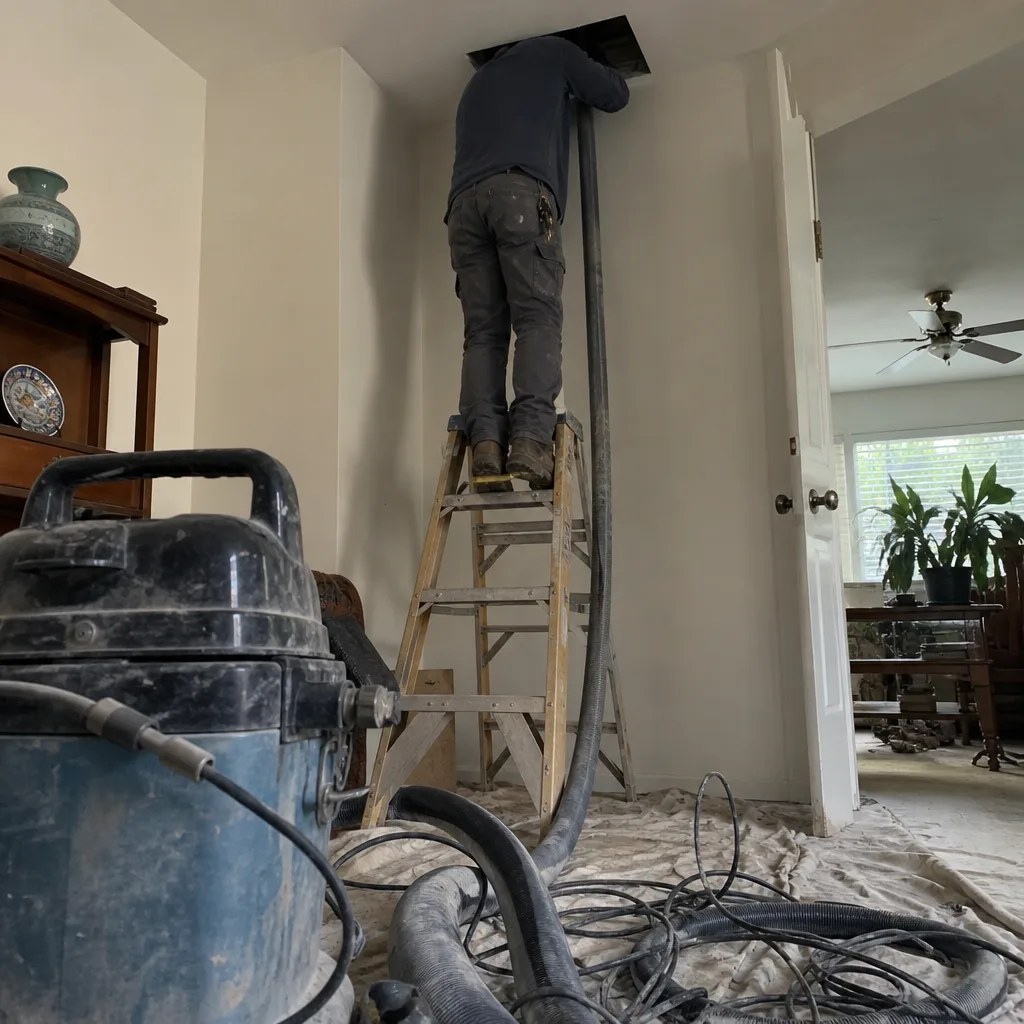 Before
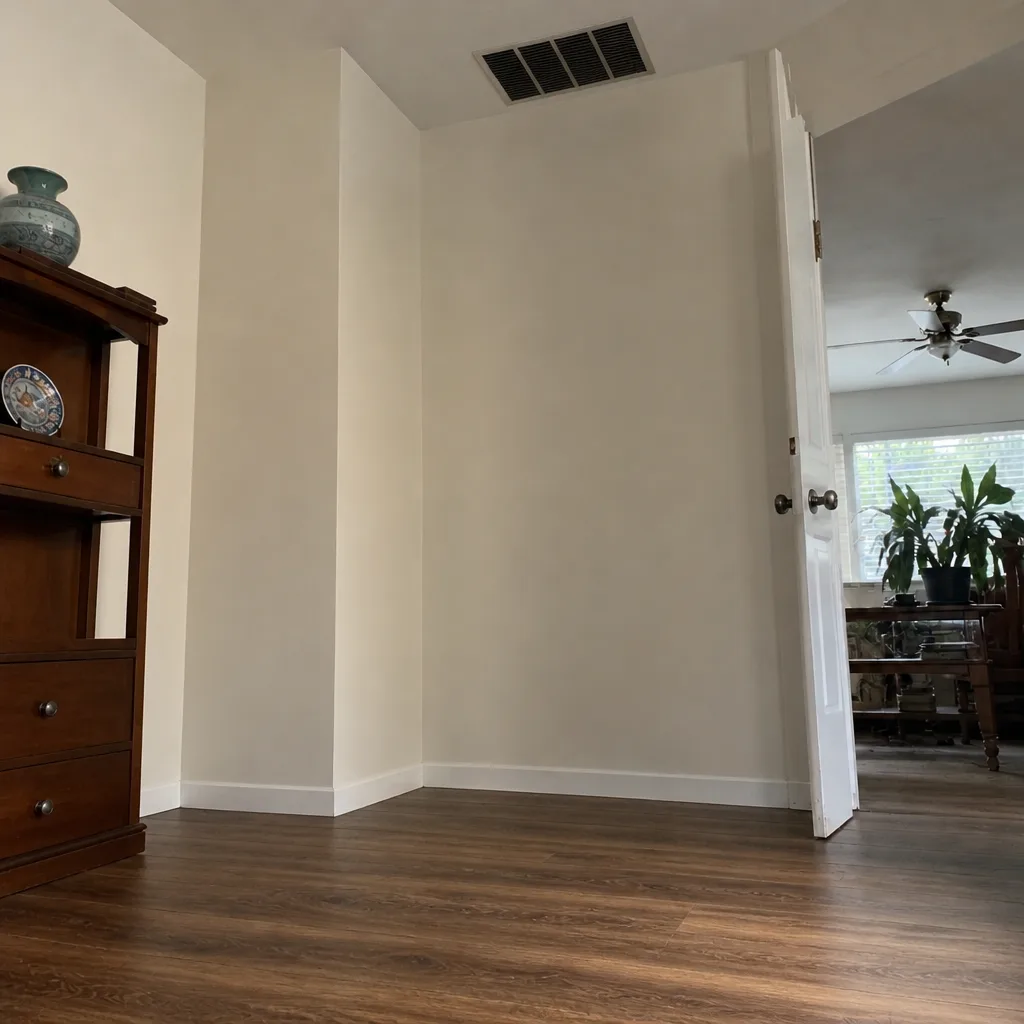 After
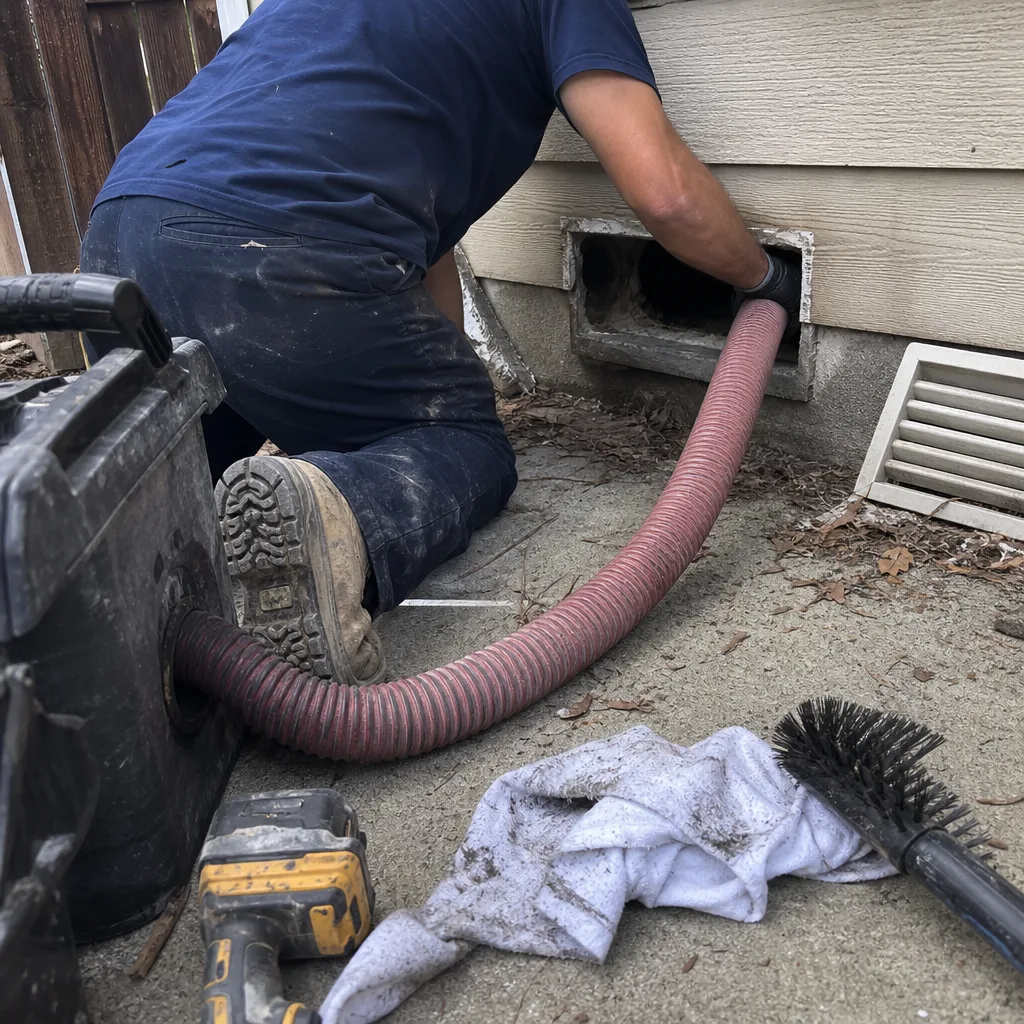 Before
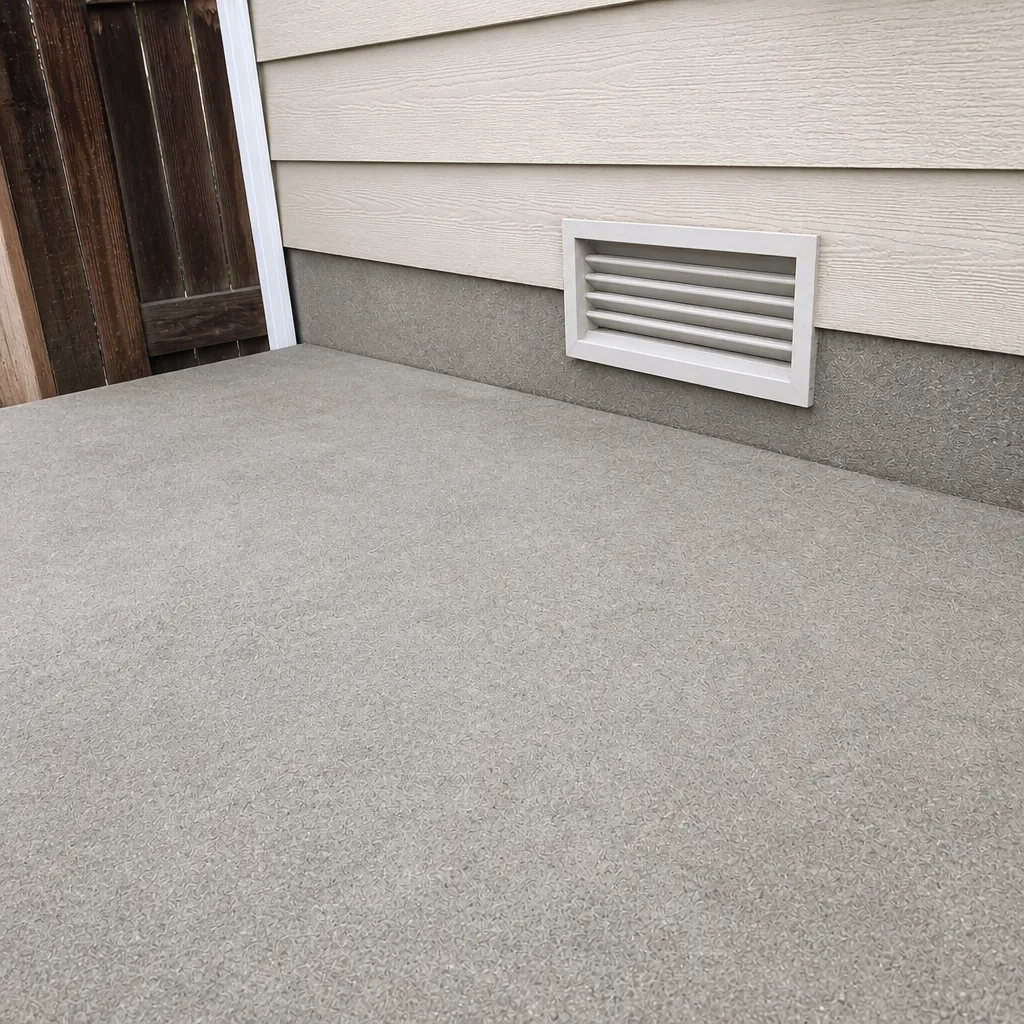 After
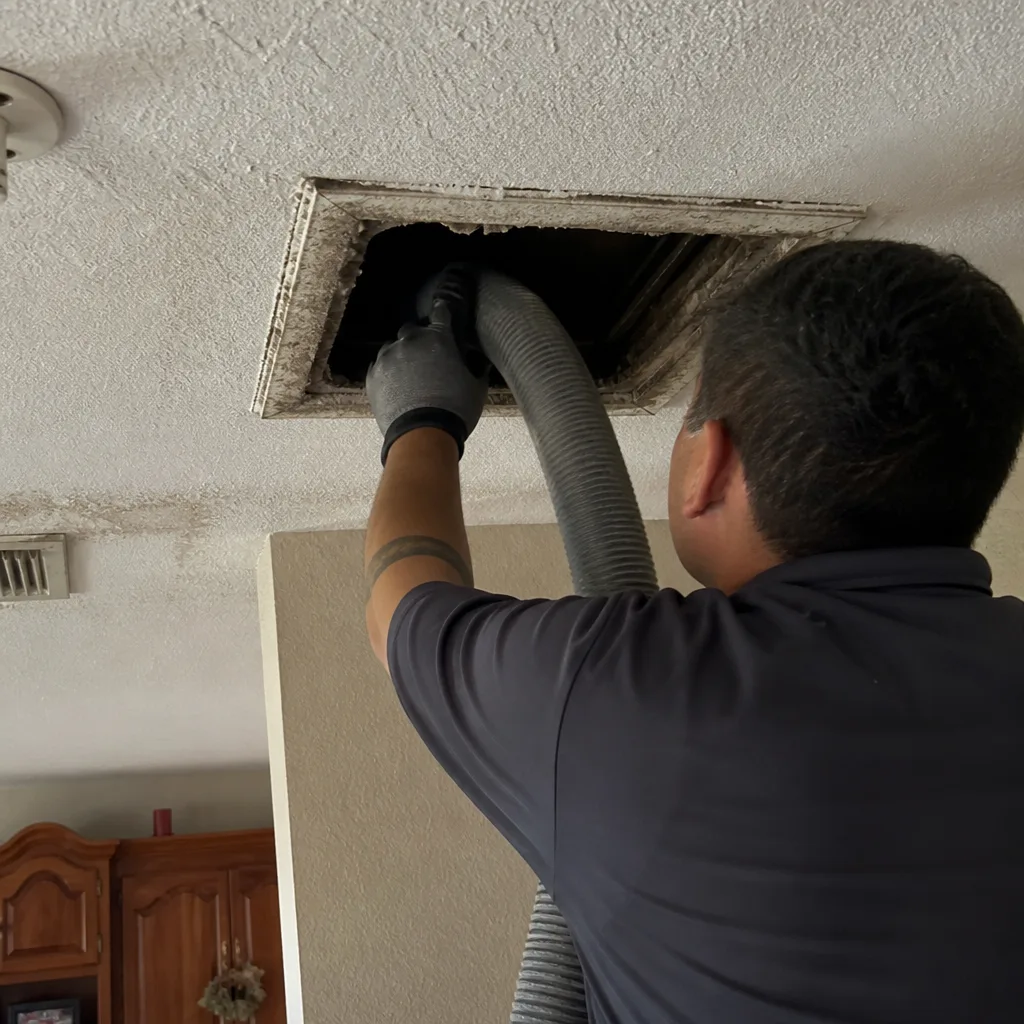 Before
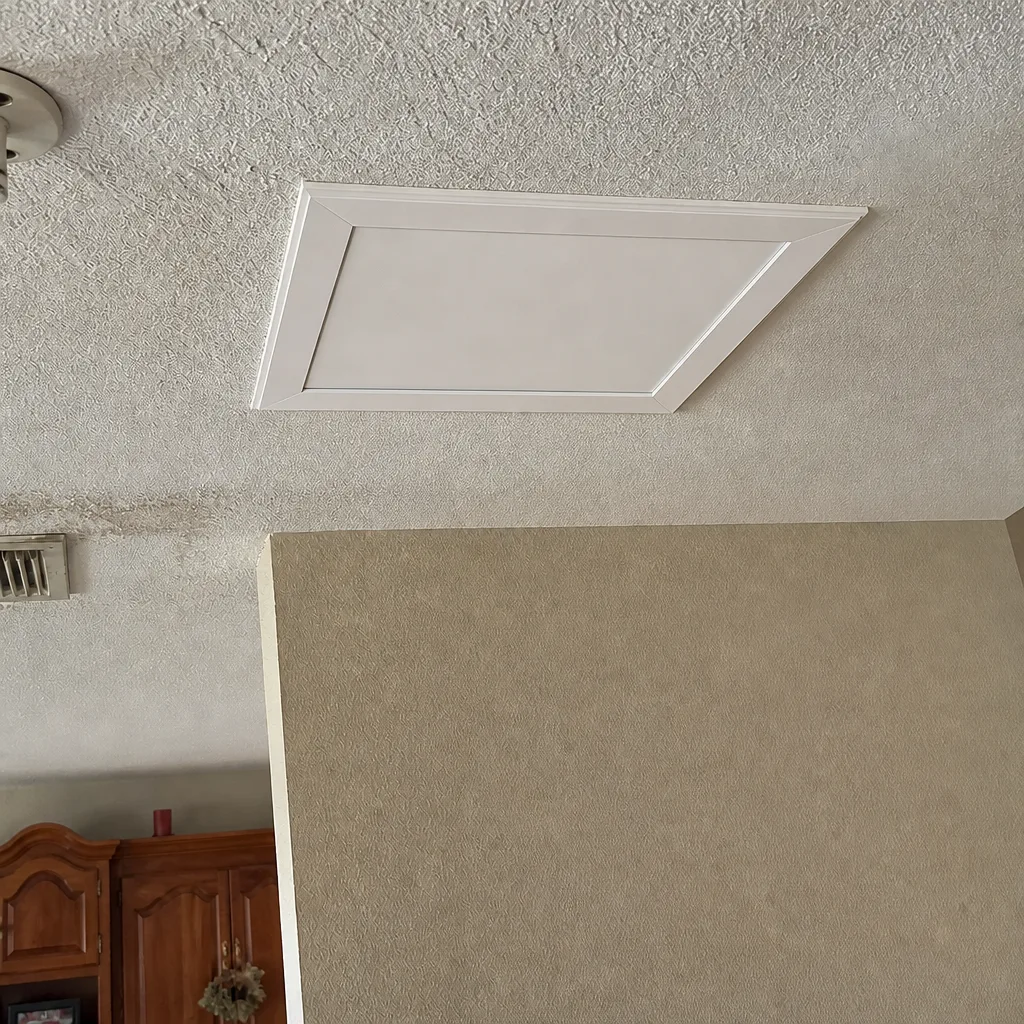 After
When to Call a Professional
Call professional service when the contamination is inside the duct run, when there’s visible mold in the system, when pest or water intrusion has affected the ductwork, or when the ducts themselves are damaged and need repair. Call also if you’re seeing dust return in days after you’ve cleaned, which usually points to a source deeper in the system than the registers. Our team at Duct Cleaning Modesto offers free estimates in Modesto – call (866) 256-3971. Our technicians have up to 13 years of experience, and every job uses professional-grade equipment you can’t rent at a hardware store.
Frequently Asked Questions
Air duct cleaning is priced per system, based on a written estimate that sets the scope before any work starts. The honest answer to the “how much” question in Modesto is that it depends on the system size, number of branches, access, and whether repair work is needed – which is why we offer a free estimate rather than a phone number. Call (866) 256-3971 for an exact quote – estimates are free.
Cheaper quotes usually reflect a different, smaller scope: register cleaning and a shop-vac pass on the accessible portions, not full duct cleaning under negative pressure. That scope can be done for less money because it isn’t the same job. Ask for the written scope and the equipment list – the honest comparison is only between two written scopes. Call (866) 256-3971 to talk through the scope – estimates are free.
Ask to see the before-and-after photos of your own ducts. A professional job is photographic and inspectable, and the photos are part of the job report. Rotary agitation and negative-pressure equipment leave a visible difference in the duct interior, and a proper scope states what surfaces were cleaned. We provide before-and-after photos on every job, and we walk you through the findings. Call (866) 256-3971 – estimates are free.
For most Modesto homes, duct cleaning isn’t a fixed-interval task. The right question is whether the home has a condition that warrants it – visible dust returning quickly, mold, pest contamination, recent water intrusion, a renovation, or damage discovered during inspection. Homes without those conditions can go years between cleanings. Homes with them shouldn’t wait. Call (866) 256-3971 for a free estimate to assess your specific situation.
No, and the reason is mechanical rather than a matter of effort. A shop vac creates localized negative pressure at one opening and agitates the loosest dust into other branches, while the exhaust returns fine particulate into your room. The dust that comes out is a small fraction of what was there, and the redistribution is real. Registers, filters, and the short dryer vent run are legitimately DIY; the duct runs themselves are not.
Duct cleaning removes the contamination source, and many homeowners notice less dust settling between cleanings as a result. But if the ductwork itself is damaged – torn, disconnected, or pulling dust from the attic – cleaning won’t fix that, and duct repair has to come before cleaning helps. A proper inspection tells you which case you’re in. Call (866) 256-3971 – the estimate includes an inspection.
The Bottom Line
The DIY-versus-professional framing is a false choice. There are real homeowner maintenance tasks that extend duct life and improve indoor air quality – register cleaning, filter discipline, visual flex duct inspection, and routine dryer vent lint removal – and there’s a category of cleaning that physically can’t be done without negative-pressure equipment, rotary agitation, and HEPA containment. Draw the line at the duct interior: what you can reach with a household vacuum and a cloth is yours to handle, and what’s inside the runs and under negative pressure is professional work. In Modesto, that line lands where the region’s dust load and older housing stock keep making it worth checking. Skip the shop vac shortcut and skip the cheap quote that’s really a register wipe. Call (866) 256-3971 for a free estimate from the team at Duct Cleaning Modesto. We answer 24/7. Fast dispatch from 7am to 7pm, Sunday through Friday. Covered by our satisfaction guarantee, with before-and-after photos of your own ducts on every job. Estimates are free, the price is set per job by the written estimate, and we stand behind both the cleaning and the repair.
Written by the team at Duct Cleaning Modesto.