
Emergency Air Duct Cleaning Near Me: What Modesto Homeowners Should Do First
If raw sewage has entered your duct system, running the HVAC while you wait for a technician can spread aerosolized contaminants into every room of the house within minutes. The first step isn’t calling a cleaner. It’s cutting power to the air handler so the system stops moving contaminated air. True duct emergencies are rare, and they don’t all look alike. This guide walks through what counts as a genuine emergency in Modesto, the first-response sequence that protects you and your home, and how to tell a company that can handle biohazard-adjacent work from one that only does routine dust removal.
What Actually Counts as an Emergency Duct Problem?
Most duct problems are urgent but not emergencies. A musty smell in the hallway or a visible dust ring around a ceiling vent can wait a day or two. Three situations are different: sewage intrusion into the duct runs, a confirmed rodent infestation with droppings inside the system, and soot contamination after a structure fire. Those three change what “cleaning” means and how fast it needs to happen.
Here’s how to tell which one you’re dealing with in Modesto:
- Sewage intrusion. A backed-up drain line or a plumbing failure has pushed wastewater into a duct run or the air handler cabinet. You’ll smell it before you see it. This is the most serious category because it introduces biological contamination that standard dust removal won’t fix.
- Rodent infestation. You’ve seen droppings inside a supply register, found nesting material at a return, or heard activity in the walls. Droppings inside ductwork release airborne particles every time the blower runs.
- Post-fire soot. A fire in the structure (not a small kitchen flare-up) has deposited smoke residue inside the duct system. Soot clings to duct interiors and continues to off-gas long after the fire is out.
Something else is going on if none of those three matches: a room that never warms, weak airflow at one register, or dust building up faster than usual. Those are real problems, and some trace back to damaged ductwork that needs repair rather than cleaning. They rarely need same-day work. Our air duct cleaning page covers the standard scope for routine contamination.
The Right First-Response Sequence Before Anyone Arrives
Shut the system down first, then contain the source, document everything, and call a contractor last. That order matters. Every step before the call protects your home, and the documentation you gather makes the contractor’s job easier and your insurance claim stronger.
1. Cut power to the air handler
Turn the thermostat to off, then switch off the breaker that feeds the air handler. This stops the blower from pulling contaminated air through the duct system and pushing it into living spaces. Don’t run the system “to see if it clears up.” It won’t, and it spreads the problem.
2. Contain the source
For a sewage backup, shut off the water feeding the affected area if you can reach the valve safely. Block or tape plastic over the nearest supply registers in the affected zone to slow migration. Keep people and pets out of the rooms nearest the contamination. Don’t spray air freshener or run fans. Fans move contamination, they don’t remove it.
3. Document everything for insurance
Photograph the source, the affected registers, and any visible staining before anyone cleans a thing. Save receipts for emergency mitigation supplies. Most homeowner policies treat sudden water or fire damage differently than long-term neglect, and a clear photo record from the first hour supports your claim.
4. Call a contractor who handles this scope
Once the system is off and the source is contained, call. Note the day and approximate time; crews dispatch 7am to 7pm, Sunday through Friday. If you’re calling outside those hours, we answer 24/7 and book you into the next opening.
What a Legitimate Emergency Duct Cleaning Scope Looks Like
An emergency cleaning after sewage or fire contamination is not the same job as routine dust removal, and any company that quotes it like one is telling you something. Source removal at this level involves containment, negative pressure, and sometimes duct section replacement rather than cleaning.
Here’s what a proper scope typically includes:
- Containment first. Negative-air machines hold contaminants inside the work zone so they don’t migrate into other rooms during cleaning. Abatement Technologies equipment is built for this kind of containment, which is why we keep it on hand for contamination-level situations.
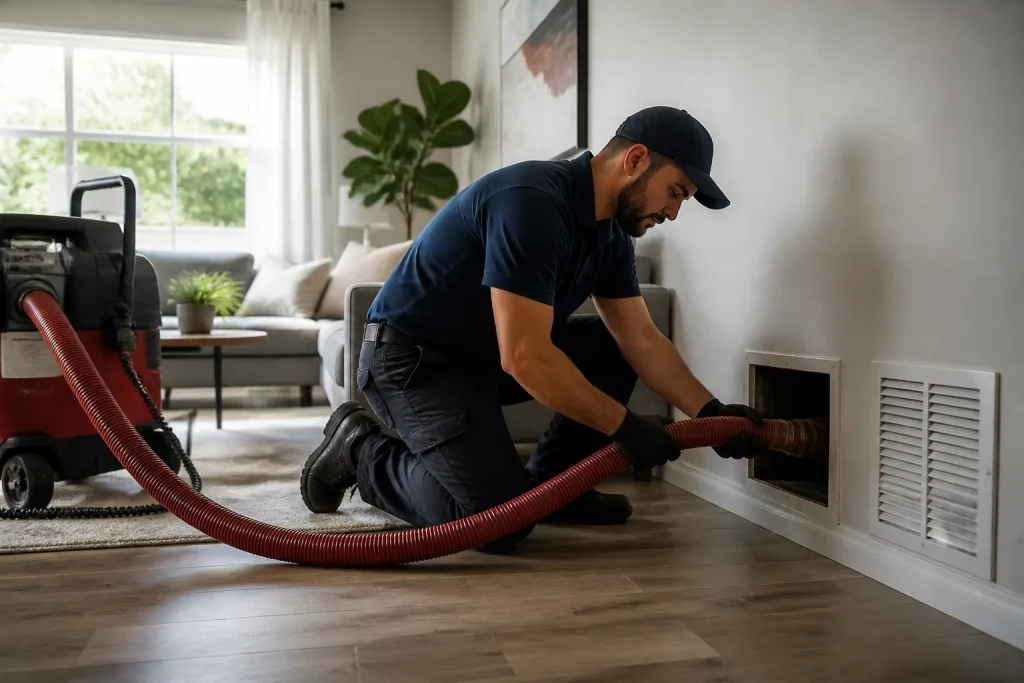
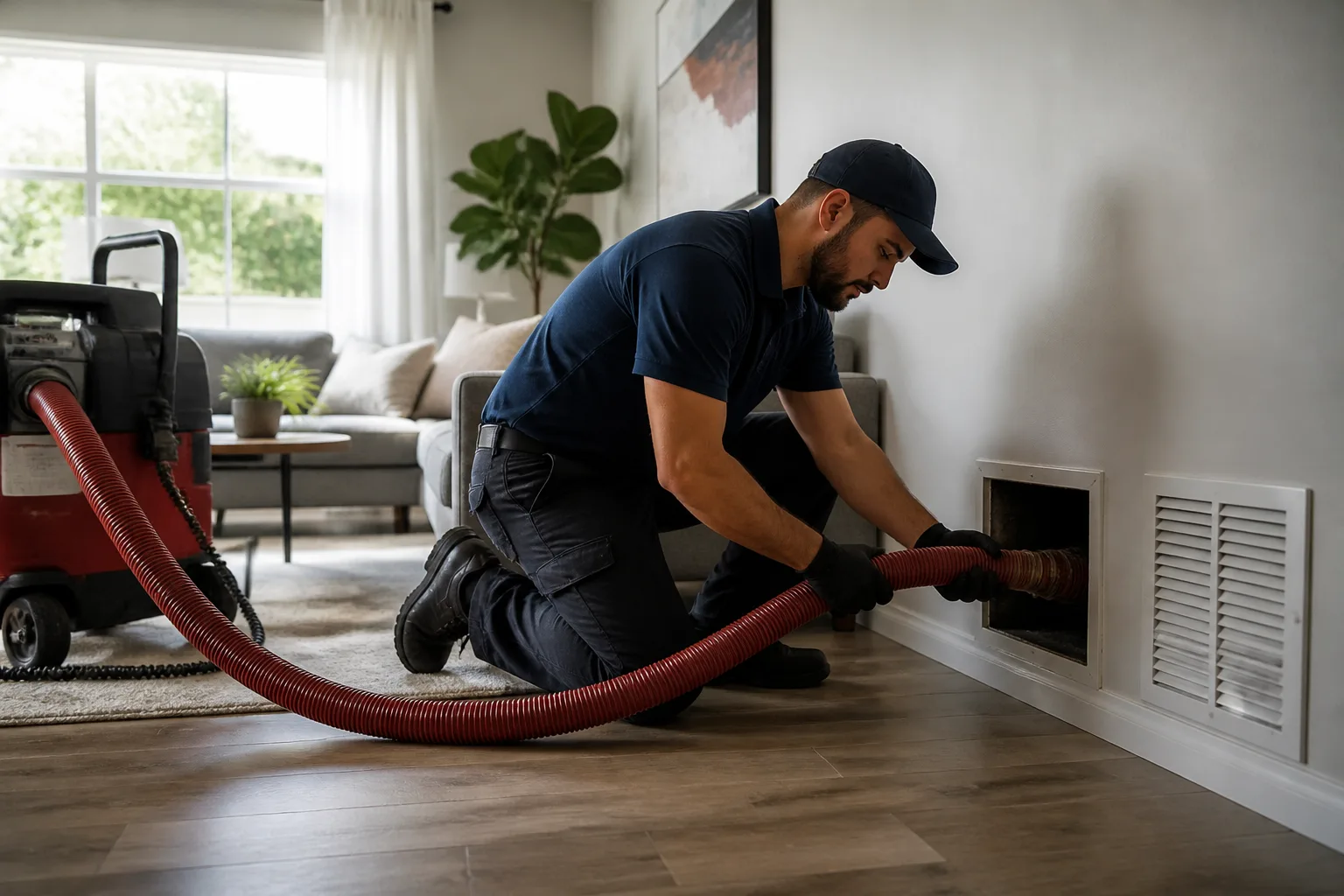
- Source removal before surface work. Rotary brush systems like Rotobrush agitate and pull debris from duct walls rather than blowing it downstream. A shop vac and a flexible wand aren’t going to handle sewage residue or soot.
- Duct section replacement when cleaning won’t restore it. Porous duct board and flex duct that has absorbed sewage or heavy soot often can’t be cleaned back to a safe condition. Replacement is the honest answer in those cases, and it falls under air duct repair work.
- Filter and IAQ review after cleaning. Once the ducts are clean, filter selection and air quality equipment matter more than most homeowners realize. We work with Aprilaire and Honeywell systems for that follow-up conversation.
If a company can’t explain its containment setup or brushes off the possibility of replacement, that tells you where their scope ends. Our Duct Cleaning Modesto team walks through the equipment question on every emergency call before quoting anything.
How to Verify a Company Can Handle Contamination-Level Work
Ask what equipment they’ll bring and how they’ll contain the work zone. A company equipped for biohazard-adjacent duct work answers those questions with specific equipment names and a containment plan. A company that only does routine cleaning generally can’t, and you can usually tell within the first two minutes of the call.
A few questions worth asking before you book:
- “What negative-air equipment will you use?” Legitimate answers name real systems. Abatement Technologies and Nikro negative-air machines are the standard for containment-grade work.
- “How do you handle duct material that’s absorbed contamination?” The answer should include the possibility of replacement, not just cleaning. Companies that promise every duct can be cleaned without exception are overpromising.
- “Will you photograph the before-and-after condition of our ducts?” You should be able to see what was removed from your own system, not a stock photo.
- “Is your price per system or per vent?” A flat price per system agreed before work starts is the standard for emergency work. Per-vent pricing on a contamination job is a red flag because the scope can’t be whittled down to vent count.
For a broader picture of safe vent maintenance around the home, our dryer vent cleaning page covers the lint and fire-risk side of vent work, which is a separate safety concern from duct contamination but worth understanding alongside it.
Modesto Wildfire Smoke: When Cleaning Is Warranted and When It Isn’t
Wildfire smoke events in the San Joaquin Valley push fine particles into homes, but they don’t automatically mean your ducts need emergency cleaning. In most cases, a good filter change and HEPA vacuuming of accessible surfaces handle smoke intrusion. Full duct cleaning becomes warranted when smoke residue is inside the system itself, usually after a fire close to the structure or when smoke has been drawn through the return over an extended period.
Here’s the practical split for Modesto homeowners after a smoke event:
- HEPA vacuum plus filter replacement is usually enough when the smell fades within a few days of improved outdoor air and filters are changed promptly.
- Full duct cleaning is warranted when smoke odor persists inside the home weeks after the outdoor air clears, when return registers show visible dark residue, or when anyone in the household is sensitive to fine particulates.
- Emergency-level contamination is different and comes from a structure fire with soot inside duct runs, sewage intrusion, or rodent activity. Those three always justify a call.
The valley’s smoke seasons do add a filter-management habit worth adopting: change filters after any significant smoke event rather than waiting for the usual interval. For more on the local conditions that drive these patterns, see our Modesto page.
When to Call a Pro Instead of Waiting
The decision is simpler than it feels in the moment. If the HVAC system is moving contaminated air, call. If you’re not sure whether the contamination has reached the ducts, call and describe what you see; a short conversation usually settles it. Waiting on a sewage backup, rodent infestation, or post-fire situation only gives the contamination more time to settle into duct material, which pushes the job toward replacement instead of cleaning.
For routine smells and dust that don’t trace back to those three categories, a scheduled cleaning is the right path, and it can wait a day or two. Our technicians have up to 13 years of experience on duct systems across all three service types, so a quick call is usually enough to sort out which category you’re in.
Related services in Modesto: air duct cleaning, air duct repair, and dryer vent cleaning.
The Bottom Line
True duct emergencies come down to three scenarios: sewage intrusion, confirmed rodent infestation, and post-fire soot. Shut down the air handler first, contain the source, document everything for insurance, and call a contractor last. When you call, ask about containment equipment and get a flat price per system agreed before work starts. If you’re in Modesto and need help, Duct Cleaning Modesto offers free estimates – call (866) 256-3971. We answer 24/7. Fast dispatch from 7am to 7pm, Sunday through Friday.
Frequently Asked Questions
Emergency-level duct cleaning after contamination is priced per system based on the scope of the job, not per vent. A standard cleaning is one range; a job that involves containment equipment and possible duct section replacement is another. The written estimate you receive sets the final price before work starts. Call (866) 256-3971 for an exact quote; estimates are free.
No. Keep the system off until the ducts have been assessed. Running the blower pushes airborne contaminants through the whole system and into every room, which makes the cleaning harder and the outcome less certain. Shut the breaker to the air handler and leave it off.
It depends on the cause. Sudden events like fire or sudden water damage are typically treated differently than long-term neglect or pest issues, and coverage varies by policy. Document the damage with photos before anything is cleaned and talk to your insurer. Whatever the outcome, the estimate you get from us is honest and set before work begins.
Ask for before-and-after photos of your own ducts, not a generic sample. A company using Rotobrush rotary brushes and Nikro or Abatement Technologies negative-air equipment can show you what came out of your system. That’s the proof that matters, and we provide it on every job.
Most homes don’t need it on a fixed schedule. The honest answer is to clean when there’s a reason: visible debris at registers, a contamination event, persistent odor, or a recent renovation. If you’re in Modesto and unsure, call (866) 256-3971 and we’ll help you figure out whether it’s warranted.
Written by the team at Duct Cleaning Modesto.
Need Air Duct Cleaning Help?
Call Duct Cleaning Modesto - licensed & insured, with free written estimates in Modesto.
(866) 256-3971